



Cybercriminals are once again ingeniously exploiting blockchain technology. A multi-step scheme involving the use of fake websites aimed to steal assets from connected user wallets, warns Check Point Research. The campaign, directed at owners of tokens from over 100 popular projects, caused losses for approximately 200,000 people.
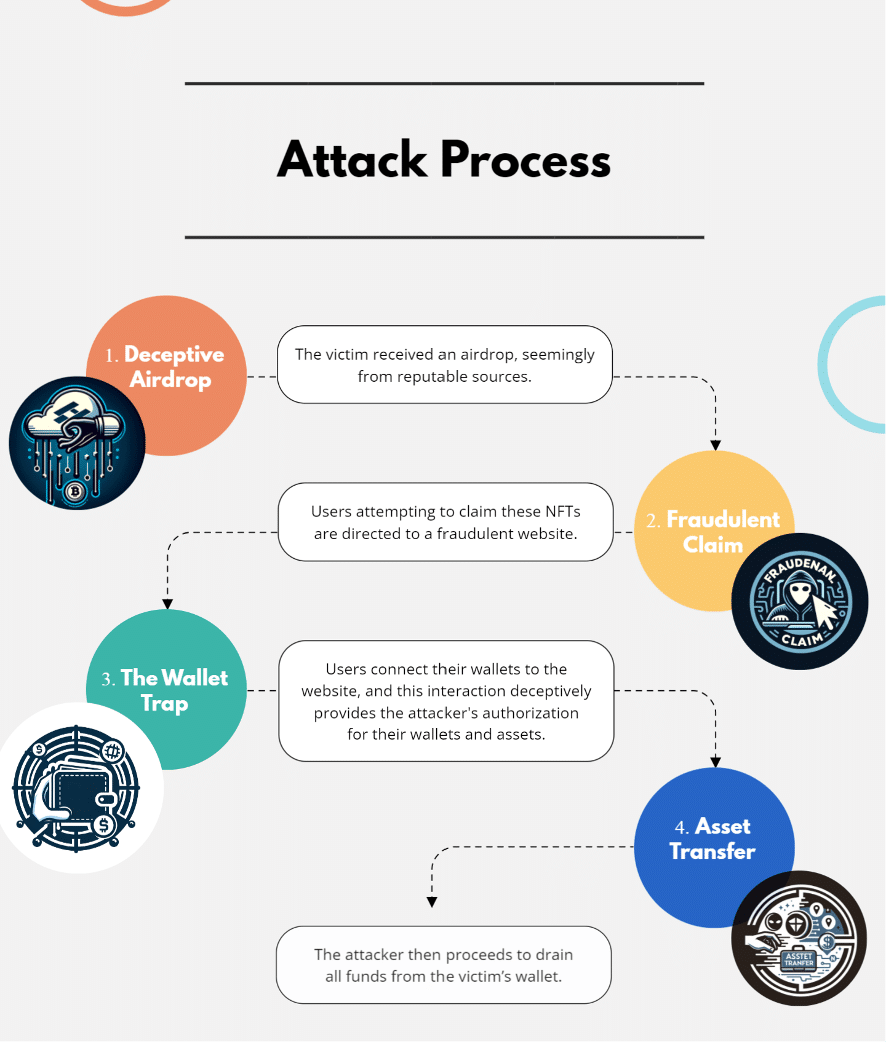
Check Point Research has issued a warning about a new, sophisticated NFT scam campaign targeting owners of tokens from over 100 popular projects. The fraud involves sending airdrops, which appear to come from legitimate sources such as Ape NFT. These airdrops lead to specially prepared web pages, the purpose of which is to encourage victims to connect their wallets, thereby giving the attackers full access to the funds.
Eventually, recipients receive an airdrop from an apparently credible source, persuaded to claim the prize on a fake website, and upon connecting their wallets, they unknowingly authorize the attacker, leading to the theft of their assets.
Investigations conducted by Check Point Research have revealed that the attackers utilized advanced infrastructure to distribute fake airdrops to more than 200,000 people. Analyzing specific transactions, they discovered that sender addresses were falsified, creating the illusion that the NFTs came from credible sources like Yuga Labs or Immutable X.
The effectiveness of the fraud lies in exploiting the complexity of blockchain technology. The attackers take advantage of processing and presenting information about transactions, using proxy agreements and unverified contract codes to hide their actions. Such an approach makes it difficult for users and analysts to recognize the actual nature of transactions.
NFT users are advised to be cautious, check links, understand the interactions of smart contracts, and make use of trusted tools for transaction verification. The report underlined the need for constant vigilance and skepticism in the digital asset environment, given the increasing sophistication of such scams.
Developed by Check Point Software, the Threat Intel Blockchain system continues to collect valuable information about emerging threats, which is published on an ongoing basis. As part of joint efforts, cybersecurity specialists strive to provide investors with the knowledge they need to safely navigate the world of cryptocurrencies and protect against potential pitfalls.