The number of court cases involving Polish-zloty loans linked to WIBOR continues to rise. More than 2,700 first-instance proceedings were under way at the end of 2025, according to figures cited in a Sobieski Institute report. Its authors estimate that widespread successful challenges could cost banks up to PLN 284 billion in an extreme scenario. The Polish Bank Association warns that losses on that scale would threaten lending and the wider economy.
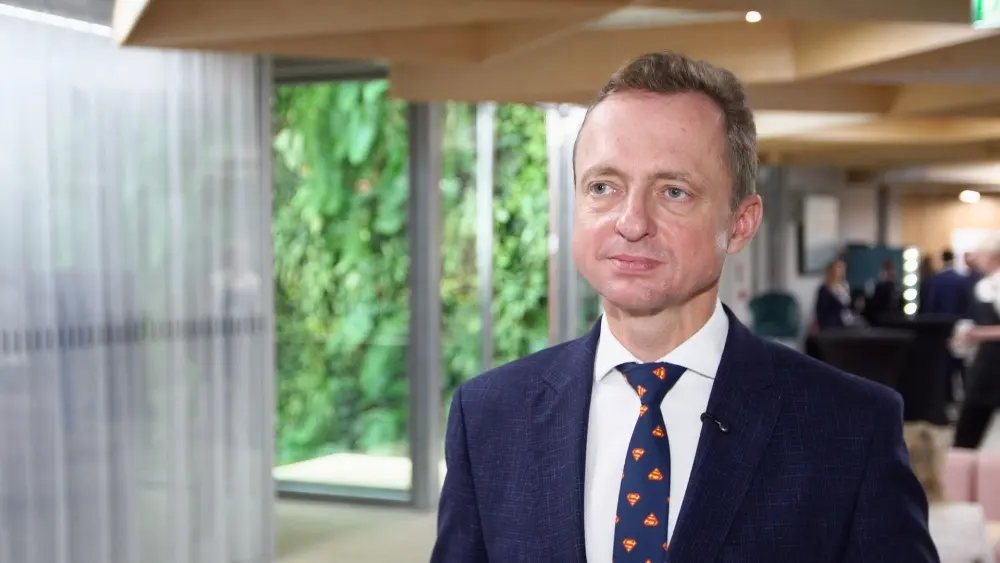
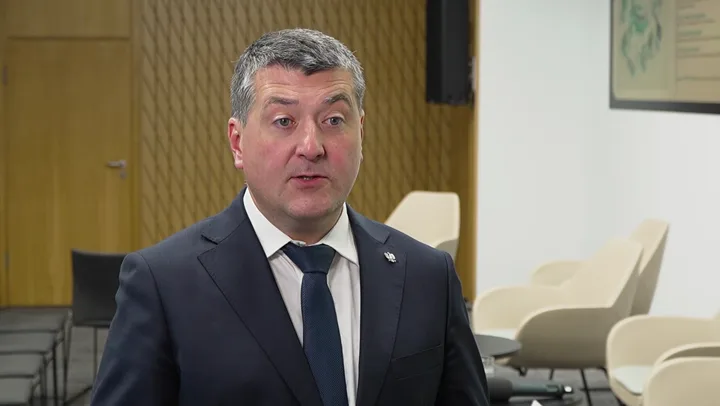
“The potential consequences for banks that lost these cases would be enormous and considerably greater than what we saw with Swiss-franc loans. We estimated those consequences at more than PLN 284 billion. That is close to banks’ combined capital, so it could almost wipe it out. Some banks would fail, while others would have serious difficulties lending. The Polish economy would certainly suffer,” Leszek Skiba, president of the Sobieski Institute and co-author of the report, told Newseria.
WIBOR is used across Poland’s financial system
WIBOR, the Warsaw Interbank Offered Rate, is a reference rate reflecting the interest rate at which banks are willing to lend to one another for a specified period. Its role extends beyond mortgages.
“WIBOR is an indicator of the price of money. It is used not only by banks granting mortgages, but also for many Treasury bonds. There are leasing assets and derivatives too, so it really sits at the heart of the Polish economy,” Skiba said. In his view, challenges to the benchmark introduce uncertainty for Polish and foreign companies, savers and investors considering government bonds.
Dr Tadeusz Białek, president of the Polish Bank Association, noted that the value of derivatives tied to WIBOR is difficult to estimate because a substantial share is traded outside Poland, including in London.
The institute’s report puts the total value of financial assets using WIBOR at more than PLN 6 trillion at the end of 2024, including derivatives. That was equivalent to around 167% of Poland’s GDP. More than PLN 1 trillion related to assets held by banks and credit unions, including mortgages worth PLN 305.6 billion, corporate loans worth PLN 266.9 billion and debt securities worth PLN 280.2 billion.
The report also identifies PLN 480.7 billion in WIBOR-linked bonds, including PLN 293.1 billion in Treasury bonds. Banks’ total interest income from WIBOR-based mortgages in 1997–2025 amounted to PLN 218.1 billion. More than PLN 100 billion came from loans still outstanding and PLN 117.4 billion from loans already repaid. Fees and commissions were estimated at PLN 35.2 billion.
Worst-case losses could restrict lending
“When there is a significant banking crisis, the first problem is always that banks stop lending. Some cannot afford to lend, while others have to protect their core capital,” Skiba said.
The report’s authors argue that widespread defeats in WIBOR litigation could transfer costs to other customers through higher margins, fees and commissions, while reducing the range of financial products available. Legal uncertainty could also make banks less willing to enter long-term lending agreements.
“Banks may prefer to lend to customers for shorter periods. That could indeed create a situation in which it is harder to obtain a mortgage,” Skiba said, describing a potential outcome rather than an established change in lending policy.
Banks point to the CJEU judgment and supervisory positions
The report cites a Court of Justice of the European Union judgment of 12 February 2026. According to its account of the ruling, courts hearing consumer disputes should focus on the terms of the individual contract rather than assess the benchmark methodology’s compliance with EU rules. It also says EU law does not require banks to provide consumers with detailed technical information on how the rate is calculated.
Białek emphasised that Poland’s Financial Supervision Authority licenses the benchmark administrator. He argued that attempts to undermine WIBOR on a broad scale would have serious consequences for the economy.
The report estimates banks’ aggregate potential costs, taking account of the likelihood of litigation, at PLN 78.7–283.7 billion. The upper end approaches the sector’s total equity of PLN 322 billion at the end of 2025. The authors estimate that accumulating PLN 284 billion would take around 15 years. By comparison, provisions for Swiss-franc litigation exceeded PLN 102 billion over six years, and the highest annual total, recorded in 2023, remained below PLN 20 billion.
“In these worst-case scenarios, the banking sector would not be able to absorb the losses. A substantial part of it would have to be subject to resolution decisions, meaning an orderly winding-up,” Białek said.
However, he stressed that banks are not preparing for that scenario because they do not expect it to occur. He pointed to the CJEU judgment and the positions of supervisory institutions. In his account, the Financial Stability Committee has consistently defended WIBOR’s administration and licensing and rejected allegations of manipulation.
Court cases are increasing, while the report calls for clearer contracts
The number of first-instance cases rose from 654 at the end of 2023 to 1,532 a year later and 2,728 at the end of 2025. The Polish Bank Association reported more than 3,800 cases at the end of July. Białek said that, by that point, 277 judgments had been issued and all had dismissed the WIBOR-related allegations. Those figures and assessments are the association’s account of the litigation landscape.
The Sobieski Institute recommends that the Financial Supervision Authority, the National Bank of Poland and the Ministry of Finance reaffirm the legal standing and safety of WIBOR and POLSTR, the benchmark intended to replace it.
It also proposes a standard mortgage agreement endorsed by a public institution. “If banks grant mortgages using a standard template, legal risk is lower. It provides safety for both the bank and the customer,” Skiba said. He argued that clearer contractual standards could reduce future disputes and the incentive to charge unusually high margins.
Source: Newseria. English adaptation of the original report.