
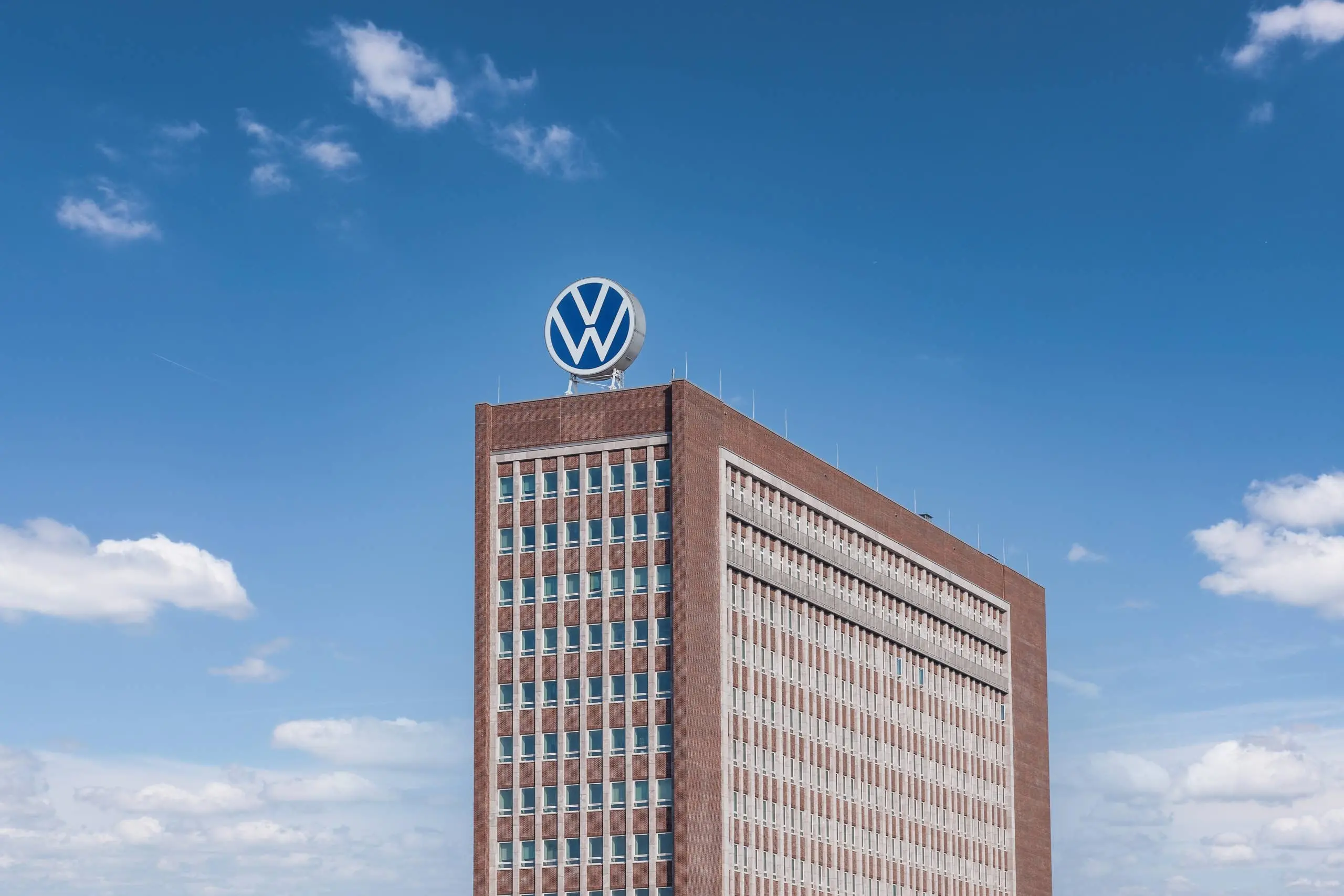
Volkswagen has dropped out of the Euro Stoxx 50 as its shares trade at levels not seen in 16 years. The German carmaker has lost more than three quarters of its market value since its 2021 peak, leaving its market capitalisation at around €38 billion.
The group is dealing with weaker sales in China, growing pressure from Asian manufacturers, problems at Porsche and the cost of a wide restructuring programme.
Nokia replaces Volkswagen
Volkswagen and Dutch information-services group Wolters Kluwer were removed from the Euro Stoxx 50. Their places were taken by Nokia and French energy group Engie.
Operating-margin guidance cut to a maximum of 1%
Volkswagen now expects a 2026 operating margin of no more than 1%, down from an earlier forecast of 4–5.5%. Revenue is expected to be around €315 billion.
The group expects approximately €10 billion of one-off charges. Around €6 billion is linked to an impairment connected with Porsche, while a further roughly €2 billion covers restructuring, early-retirement programmes, the planned sale of the Osnabrück plant and pressures in China.
Porsche and China remain major pressure points
Volkswagen owns roughly 75% of Porsche. The sports-car brand is dealing with lower sales in China, the cost of changes to its electric-vehicle strategy and weaker profitability. The deteriorating outlook contributed to the approximately €6 billion impairment.
Volkswagen’s sales in China fell by around 20% in the first half of 2026. Local manufacturers, particularly in electric vehicles, continue to increase both price and technology pressure.
Group plans to reduce around 50,000 positions
Under its Future Plan 2030, Volkswagen plans to adjust staffing across the group by around 50,000 positions, including management roles.
The programme includes a simpler corporate structure, lower costs, changes to operations in China and North America, and a review of the group’s company and asset portfolio. Volkswagen intends to shrink that portfolio by roughly one third by selling or restructuring assets considered less strategically important.