
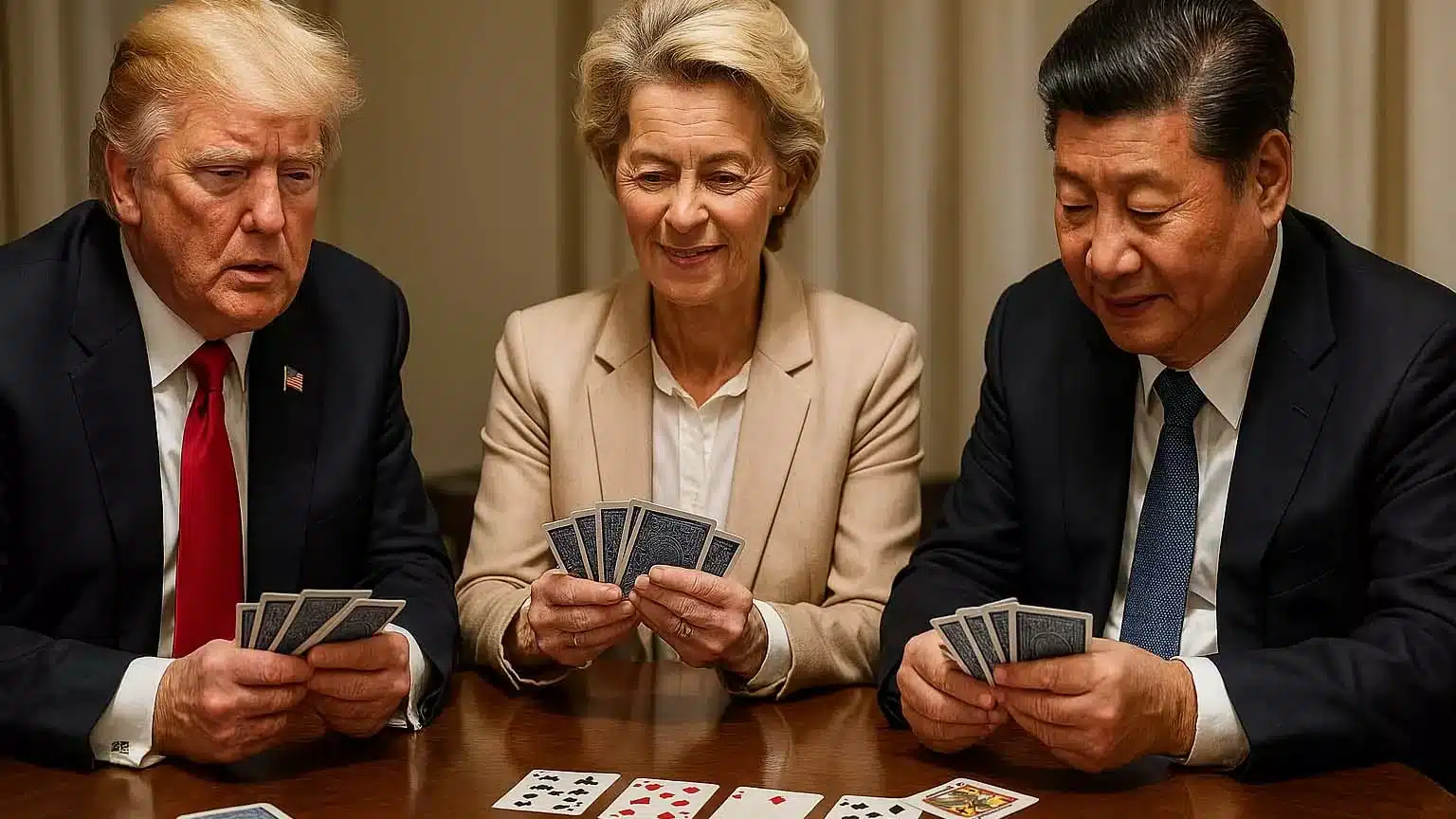


The United States has once again challenged Europe with a renewed threat of steep import tariffs. Although Washington temporarily suspended a sweeping 50-percentage-point tariff hike on European goods until July 9, it simultaneously raised duties on steel and aluminum, escalating the ongoing trade standoff. The question now is whether the European Union can craft a coherent response—a critical factor for reaching a sustainable agreement.
Despite growing tensions, the EU still holds significant bargaining power, as it remains the United States’ largest import partner. However, the stakes are high. A general increase in U.S. tariffs on European products could raise average tariffs from 9% to approximately 30%, putting an estimated €100 billion in EU exports at risk—equivalent to 0.5% of the EU’s GDP.
Temporary Reprieve, but Pressure Mounts
The U.S. postponed the implementation of the proposed tariff hikes—originally scheduled for June 1—to July 9 as trade negotiations continue. However, this concession was quickly overshadowed by the imposition of new tariffs on EU steel and aluminum. According to Allianz Trade, the sectors most at risk include machinery, automotive, and food industries—particularly in Germany, Italy, and France.
While U.S. consumers and businesses would also feel the impact, with potential inflation rising by 0.4 percentage points and GDP growth falling by 0.2 percentage points, the EU remains divided on how to respond. Some member states push for a firm and swift retaliation, while others are cautious, wary of harming ties with the U.S. or jeopardizing domestic economic interests.
Europe’s Dilemma: United or Divided?
The EU has yet to reach consensus on its approach. Divergences between member states risk producing a diluted or chaotic reaction, undermining the bloc’s credibility and effectiveness in transatlantic diplomacy. Options currently under consideration include concessions on liquefied natural gas (LNG) and agricultural imports, adjustments to digital taxation, and enhanced defense cooperation.
Despite internal divisions, the EU holds several strategic cards. In addition to the LNG and agriculture proposals, other negotiating options include:
- A zero-for-zero tariff agreement on key industrial goods,
- Adjustments to the digital services tax,
- Flexible implementation of the Carbon Border Adjustment Mechanism (CBAM),
- Inclusion of U.S. arms manufacturers in the EU’s SAFE defense funding program.
There are also discussions around redirecting some exports toward Mercosur countries or even China to reduce reliance on the U.S. market.
Tariffs Could Trigger a Lose-Lose Scenario
The U.S. threat of 50% tariffs represents a significant escalation from the 20-point hike announced earlier during the so-called “Liberation Day.” While diplomatic talks have delayed their implementation, the announcement itself caused concern across European industries.
More than 40% of EU exports to the U.S. would still be exempt due to sector-specific exclusions (e.g., pharmaceuticals, semiconductors), but average tariffs on the remaining goods would rise sharply—from around 9% to 30%. This would push overall U.S. import tariffs from 12% to nearly 16%, approaching recessionary levels.
In 2024, the EU was the top supplier of U.S. imports, with goods valued at $618 billion—well ahead of Mexico ($510B), China ($463B), and Canada ($422B). Allianz Trade estimates that the U.S. tariff hike would reduce American GDP growth by 0.2 percentage points and increase inflation by 0.4 points—disrupting an already weak growth outlook of 1.3% to 1.5% for 2025.
On the European side, the impact could be equally severe. Losses in exports could exceed $100 billion, equivalent to 0.5% of EU GDP. Germany and Ireland would be hit hardest, with Germany’s GDP potentially falling by 0.6% and Ireland’s by up to 3.4%, especially if pharmaceutical exports were affected.
Table 1: Top 10 EU Export Sectors Most Affected by U.S. Tariffs
| Country | Sector | Exports (USD bn) | Max Export Loss (USD bn) |
|---|---|---|---|
| Germany | Machinery and Equipment | 35.5 | 6.7 |
| Germany | Automotive Manufacturers | 29.7 | 5.6 |
| Italy | Machinery and Equipment | 13.7 | 2.6 |
| Ireland | Chemicals – Industrial and Others | 10.7 | 2.0 |
| France | Transportation Equipment | 8.1 | 1.5 |
| France | Machinery and Equipment | 7.8 | 1.5 |
| Ireland | Chemicals – Plastics and Rubber | 7.4 | 1.4 |
| Italy | Agri-food – Food and Beverage Production | 7.1 | 1.3 |
| Italy | Textiles – Clothing and Footwear | 6.7 | 1.3 |
| Slovakia | Automotive Manufacturers | 6.6 | 1.2 |
Sources: UNCTAD, Allianz Research
The EU’s Negotiating Toolkit
Brussels is trying to formulate a unified response, but internal divisions persist. While EU institutions are pushing for a swift resolution, member states remain split on both the extent of concessions and retaliatory measures. A proposed EU counter-tariff list includes U.S. imports worth up to €95 billion—covering aerospace (€10.5B), auto parts (€10.3B), agricultural goods (€6.4B), and electrical equipment (€7.2B).
However, some EU countries fear backlash or further escalation, especially in sectors sensitive to U.S. relations. There is also disagreement over what to offer in return for tariff relief. Earlier this year, the EU proposed €50 billion in additional imports from the U.S., focusing on LNG and agricultural products like soybeans—well below the U.S. expectations of €100 billion or more.
Other politically sensitive topics, such as digital taxation or climate-related fees, are sparking friction within the EU. These internal debates are undermining the European Commission’s ability to present a strong and coordinated negotiating position.
Table 2: EU’s Negotiation Levers
| Lever / Concession | Description | U.S. Benefit | EU Benefit | Main EU Beneficiaries |
|---|---|---|---|---|
| Increased LNG Imports | Boosting U.S. LNG imports into Europe | Reduces U.S. trade deficit, energy exports | Secures energy supply, diversification | Germany, Netherlands, Poland |
| Agricultural Product Purchases | Buying more U.S. soy and beef | Supports politically key U.S. farmers | Maintains U.S. market access for EU agriculture | France, Spain, Italy |
| Zero-for-zero Industrial Tariff Deal | Mutual tariff eliminations for key industrial goods | Market access win | Avoids car tariffs, boosts EU exports | Germany, Slovakia, Italy |
| Digital Tax Adjustments | Delaying/modifying EU digital services taxes | Protects U.S. tech giants | Creates room for broader deal, avoids lawsuits | Ireland, France, Sweden |
| CBAM Flexibility | Phased CBAM rollout to ease U.S. exporter concerns | Reduces cost burden on U.S. businesses | Preserves trade diplomacy, shows climate leadership | Germany, Denmark, France |
| Defense & Security Cooperation | €75B potential EU spend on U.S. defense gear | Economic boost, alliance unity | Strengthens EU autonomy, builds goodwill | Poland, Baltics, France |
Source: Allianz Research
Some EU members are also exploring whether closer defense cooperation—including joint initiatives and military purchases—could sweeten the broader deal. With EU plans to spend more on defense and a goal to source 50% from within Europe, up to €75 billion could still be directed to U.S. firms through the SAFE program.
Conclusion: A Complex Game of Transatlantic Diplomacy
While some of the proposed measures offer clear mutual benefits, others face domestic opposition across EU capitals—whether due to agricultural protectionism or taxation sensitivities. The European Commission views some level of compromise as necessary to avoid far more damaging consequences from full-blown trade conflict.
As the July 9 deadline looms, the EU must find a coherent and unified response. Failure to do so could not only hinder its ability to protect key export sectors but also weaken its strategic credibility in the transatlantic arena.



