
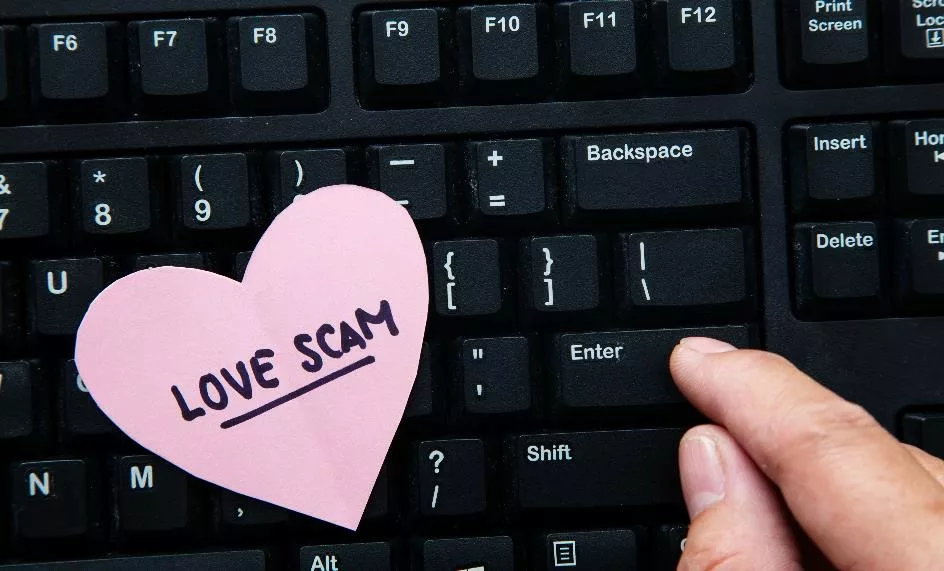


February 14 is a special date not only for couples but also for singles looking for partners. Valentine’s Day and the days leading up to it are a time when dating sites and apps are very eagerly visited. These platforms are becoming increasingly obvious places to meet new people, with the number of users exceeding 300 million. However, internet users must be on guard as the popularity of dating apps has not escaped the attention of cybercriminals. They set up fake accounts there to manipulate their victims and often rob them. These criminals are referred to as catfishers.
The phenomenon of catfishing is commonly seen primarily on internet forums and on dating websites and apps. The victims of this practice believe that they have established a real, sincere relationship with another network user. They trust and like the catfisher, which makes it easy for them to be provoked into revealing sensitive information or transferring money to the scammer, if they ask for it. The victims are usually lonely people or those actively looking for a romantic partner. Due to the exploitation of these vulnerabilities by criminals practicing catfishing, it is described as a form of cyber violence.
Catfishing, the practice of impersonating others on the Internet, has existed almost since the inception of the Internet. However, it was only named in 2010 with the premiere of the popular documentary titled Catfish. Its success led to the creation of a series of the same name, which contributed to the further popularization of this term.
The motives of users creating fake accounts online can vary, not all of them have bad intentions towards their victims. A few of the factors pushing internet users towards this type of fraud include loneliness or lack of self-confidence. Assuming a false identity gives them courage in interacting with others. However, the fraudster’s motives are usually far less innocent.
– “Catfishing can serve as a tool for criminals to extract money or sensitive data. It can also involve the scammer creating a false identity to harass or stalk their victim, because they have, for example, blocked their real account on social media. This type of scenario can expose the affected internet user to threats not only in cyberspace but also in the real world,” warns Robert Dąbrowski, head of the Fortinet engineering team in Poland.
Previously, one of the suggested actions when starting a conversation with a new, unknown network user was to search for their photos on the internet. This investigation could potentially lead to the identification of the real owner of the photo. However, the effectiveness of this method of detecting catfishing has been significantly reduced by artificial intelligence mechanisms that allow generating realistic-looking photos with the face of anyone.
Growing levels of advancement and general availability of AI are conducive to the actions of catfishers. Thanks to generative artificial intelligence, they are able to create more false profiles and thus converse with a larger number of internet users. This technique also allows them to overcome language barriers and establish contacts with people from different countries. An example that resonated worldwide was the story of a woman from France. The victim believed a fraudster pretending to be Brad Pitt, who was allegedly in the hospital and needed money. As a result, she transferred over 800 thousand euros to the criminal.
– “The development of artificial intelligence continues to expand the scale of the threat that is catfishing. Particularly dangerous in the hands of fraudsters are AI-based image processing tools that allow creating fabricated video materials. Using them, a catfisher can send not only photos but also videos to their victim to confirm to them that they are communicating with the person they claim to be. It also becomes possible to manufacture photos of non-existent people. This means that catfishers no longer have to resort to stealing other people’s photos. As a result, searching for the photos they share may no longer be an effective method of detecting fraud,” notes Robert Dąbrowski.
Internet users, in addition to having general knowledge about catfishing, must also know how to distinguish falsified materials from actual content. The Fortinet expert encourages internet users not to let their guard down after receiving video material that is supposed to confirm the identity of their interlocutor. Instead, such a film should be analyzed, paying particular attention to several details:
1. Face – If its expressions seem inadequate to the situation, and the movement of the mouth is not matched to the speech, there is a high risk that the film was fabricated.
2. Eyes – Lack of eye movement or blinking can be a sign that the video is not real.
3. Light and colors – A characteristic feature of falsified materials is their susceptibility to color changes. It is also worth paying attention to the shadows, as they may appear at the wrong angle. The lighting, which may take on unnatural colors, is also important.
4. Body shape – Fabricated materials often focus on faithfully reproducing the face, neglecting the rest of the character’s body.
Although the development of artificial intelligence makes it difficult to identify fraudsters using catfishing, there are still several behaviors characteristic of them. Noticing them in your interlocutor is a warning sign that should not be ignored. Catfishers strive to quickly establish a bond with their victim. Quick confessions of deep feelings or the creation of long-term plans by someone you have never met in real life should be taken as a worrying signal.
The fraudster will be reluctant to meet in person, so they will report many difficult life situations that prevent them from doing so. Finally, a catfisher can ask their victim for a loan or financial support. Scammers justify this in many ways, usually creating dramatic scenarios, hoping that the victim is sufficiently involved in the relationship with them to sympathize and ultimately help. Internet users must be alert to these types of behaviors and never share their data or financial resources with people whose identity they cannot verify 100%.
Source: https://managerplus.pl/przez-serce-do-konta-bankowego-uwaga-na-phishing-w-walentynki-75521



