
Disinformation is increasingly influencing perceptions of the European Union and shaping public opinion. Despite this, support for the EU among Europeans remains high. Expectations regarding its actions are also growing, especially in the areas of security and the economy. Poland is among the countries that have clearly benefited from integration and, over 22 years, has significantly narrowed the development gap with the so-called old EU member states.
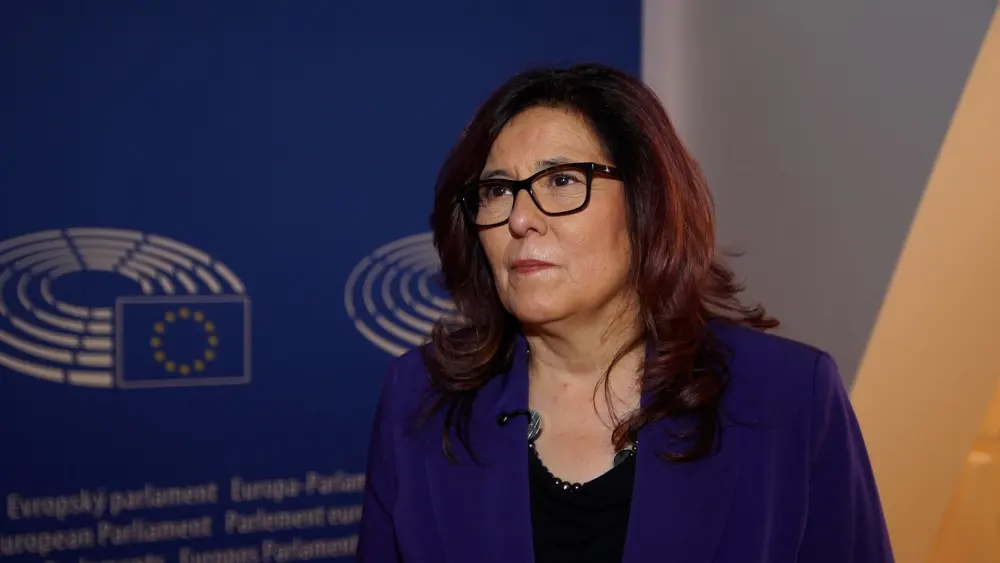
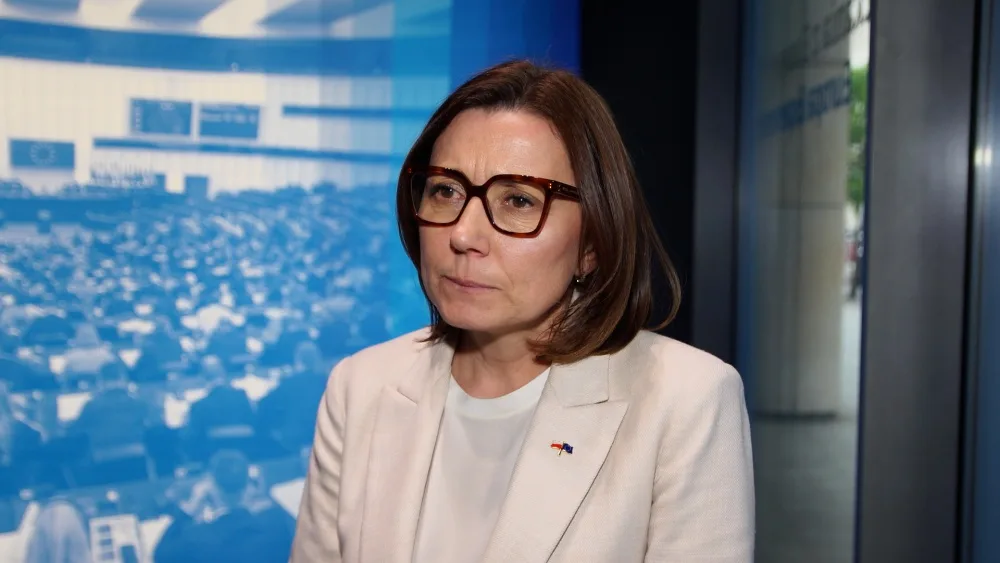
“Support for the EU in Europe is at its highest level in 18 years. In my opinion, this is also due to the sense of threat and instability surrounding us in the world. On the one hand, there is the war in Ukraine, and on the other, ambiguous signals from across the Atlantic and China’s increasingly assertive stance. Member states are turning to one another and looking at how they can defend themselves and respond to these challenges together, and Europeans feel this,” Katarzyna Smyk, Head of the European Commission Representation in Poland, told Newseria.
According to last year’s Eurobarometer survey, 66% of Europeans are optimistic about the future of the EU. A similarly high level of optimism was last recorded in 2020/2021. Among people aged 15–24, the figure reaches 72%. A growing majority of citizens believe that their country’s membership of the European Union is a good thing (62%) and see a number of benefits arising from it.
“Over the past year and a half, we have done more for Europe’s security than over the previous 60 years. A political will and a need have emerged, also in Warsaw, for the European Union to support member states’ efforts to build their security to a much greater extent. This includes financial resources, SAFE, the redirection of funds from the Cohesion Fund and the National Recovery Plan, as well as support for investments such as the East Shield and projects strengthening the defence industry,” Smyk noted.
Two-thirds of respondents would like the EU to play a greater role in protecting them from global crises and threats. They identify defence and security (40%), competitiveness, the economy and industry (32%), and energy independence (29%) as the key areas for strengthening the EU’s position in the world.
“High support should not make us complacent, because Europeans also have concerns. They are affected by high energy prices and worried about uncontrolled migration. We need to find real answers to these challenges by modifying policies in a way that gives people a sense of security and demonstrates effectiveness. But I also think there is room for better communication,” said the Head of the European Commission Representation in Poland.
“The Parliament sees the need for education because of the spread of disinformation, which undermines positive views of the European Union, often through lies neatly dressed up as opinions. These opinions are very often fuelled from outside, by countries that are not members of the European Union and compete with it, whose interest is for the EU to be weak and fall apart. In the age of social media, it is very easy to spread such views, and this does affect public opinion,” said Łukasz Kempara, press attaché of the European Parliament in Poland.
Disinformation is one of the most frequently cited threats linked to the digital space. It is feared by 69% of Eurobarometer respondents. The phenomenon of disinformation and growing polarization of public opinion has led EU institutions to place increasing emphasis on information and education activities, as well as on building direct contact with citizens. This is particularly important for younger generations, who, as in Poland, do not remember the reality before EU accession and often take many benefits for granted.
“European education and a discussion on how to improve the Union are needed, because it is neither a finished nor a perfect project. There are many dilemmas and challenges where the Polish voice is very much needed,” Smyk said.
According to this year’s CBOS survey, 82% of Poles support Poland’s membership of the European Union, while 14% oppose it. The most frequently mentioned benefits are freedom of travel (73%), improved infrastructure (52%), the possibility of working in the EU (49%) and access to EU funds (47%).
“Poles stand out compared with other Europeans because nearly 80% are able to identify EU-funded investments in their surroundings, while the EU average is around 40%,” said the Head of the European Commission Representation in Poland.
According to data from the Ministry of Finance, from May 2004 to the end of 2025 Poland received a total of EUR 268.5 billion from the EU budget, equivalent to more than PLN 1.2 trillion. Over the same period, Poland’s contributions to the EU budget amounted to EUR 99.5 billion, resulting in a positive balance of around EUR 168 billion, or more than PLN 720 billion.
“From the first day of accession, Poland was a net beneficiary in budget payments, which means that we first received millions, then billions, and now we are approaching a trillion Polish zlotys in pure transfer gains. Of course, these are not the greatest benefits of our membership, because the European Union is above all a single market that generates even greater benefits for the economy than these transfers,” Kempara said.
The largest share of funds received by Poland came under cohesion policy and the Common Agricultural Policy, which account for the vast majority of EU transfers and remain the main source of public investment and infrastructure modernization.
Over two decades of EU membership, Poland has undergone one of the fastest economic transformations in Europe. Growth has been based not only on financial transfers, but above all on access to the single market, investment and mobility. The country has significantly narrowed its development gap with other EU member states. According to Eurostat data, GDP per capita measured in purchasing power standards rose from 50–52% of the EU average in 2004 to around 80% in 2025.