


In the energy sector alone, companies with State Treasury participation are planning an investment programme worth around PLN 800 billion over the next decade. Multi-billion-zloty projects are also ahead for the infrastructure and defence industries. The government says it wants to increase local content in these projects, meaning a higher share of domestic components. A Code of Good Practice is intended to help State Treasury companies achieve this goal.
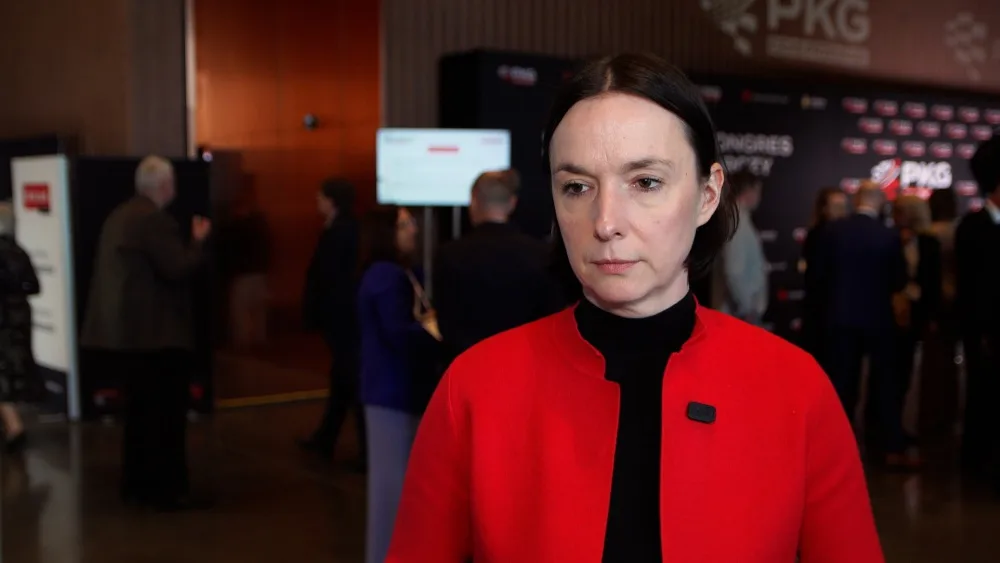
“Local content is a priority not only for the Ministry of State Assets, but for the government of Prime Minister Donald Tusk. We are taking intensive action to ensure that this priority is properly prepared and then implemented,” says Eliza Zeidler, Secretary of State at the Ministry of State Assets, in an interview with Newseria.
As Wojciech Balczun, Minister of State Assets, has repeatedly emphasised, the coming decade will be a period of numerous mega-investments, creating enormous contract potential for domestic companies. The Ministry of State Assets says it wants to create conditions that will allow Polish firms to become beneficiaries of these projects. One such tool is the “Local Content. For the Benefit of Poland” project, officially launched in April this year. Its general objective is to “Polonise” supply chains, understood as increasing the participation of domestic enterprises in investment projects.
“The team appointed by the Minister of State Assets has prepared a Code of Good Practice on the participation of the domestic component in strategic investments carried out by State Treasury companies. We assume that in the coming days it will become a formal document following the Prime Minister’s signature,” Eliza Zeidler said during the Polish Economic Congress.
The Code contains a number of recommendations on how tenders should be announced and organised, how formal barriers should be reduced, and how bids should be assessed. These measures are intended to help level the playing field for domestic companies competing for contracts.
“More time simply needs to be devoted not only to preparing the conditions for participation in a given tender procedure, but also to the criteria for evaluating bids, so that the selected offer is not merely the cheapest, but the most advantageous,” says the Secretary of State at the Ministry of State Assets.
The Code sets out criteria for determining the level of domestic content of individual entities with which State Treasury companies may wish to cooperate. Percentage weights have also been assigned to these criteria. For example, the criterion concerning the highest-level parent company having its registered office in Poland carries a weight of 25%, as does the criterion relating to the main business activity being conducted in Poland. The criteria of tax residence in Poland and employing more than half of workers who are Polish citizens or residents of Poland paying taxes and social security contributions in Poland each carry a weight of 15%. According to the ministry, these criteria are intended to support Polish companies, but also international businesses that decide to become more deeply rooted in Poland.
“This Code is a signpost. It will be supplemented, among other things, by detailed guidelines from the Minister of State Assets on how local content should be applied and how it should be calculated,” explains Eliza Zeidler. “Above all, we want to change the way of thinking: to look in Poland for services, products and elements of the supply chain, and first check whether they are available domestically — while, as we emphasise, remaining fully compliant with applicable Polish and European regulations.”
Alongside the Code, another tool intended to support local content in domestic investments is the State Purchasing Policy for 2026–2029, adopted in March this year, as well as key performance indicators, or KPIs. As the Ministry of State Assets explains, supervisory boards in companies with State Treasury participation will be able to hold management boards accountable for implementing this priority.
As Wojciech Balczun has stressed, the idea of local content goes beyond the formal aspects of corporate supervision. It is part of a new economic system. The aim of the proposed solutions is to systematically increase the participation of Polish companies in the ongoing modernisation of the Polish army, energy sector, infrastructure and national digitalisation. This is intended to strengthen Poland’s strategic autonomy and economic security, build the competitiveness of the economy, and improve the resilience of supply chains based on the potential of domestic entrepreneurs.
“Today, Polish companies already have very strong competencies and are able to supply the market with products and services of the highest quality. We want this potential to be used, but also developed. The participation of Polish companies in major strategic investments will enable them to acquire new competencies and better skills, which will naturally contribute to improving the Polish economy, our security and our resilience,” says the Secretary of State at the Ministry of State Assets.
A pilot project by Statistics Poland will also play an important role in promoting the idea of local content. The project will measure the share of domestic companies in individual sectors. The pilot will begin in June with the energy sector, and the programme is then expected to be extended to further sectors, including infrastructure and defence. Reports on the domestic component will be published once a year.



