

Spinal muscular atrophy has changed from a disease associated with very high childhood mortality and severe disability into a condition that can increasingly be managed over the long term. In Poland, nationwide newborn screening now allows many children to be diagnosed before symptoms appear and treatment to begin during the first weeks of life.
Experts stress that timing is critical because motor neurons lost to the disease cannot be recovered. In the first three years of Poland’s screening programme, more than 750,000 newborns were tested and 101 cases of SMA were identified. Around 70% of the diagnosed children had not yet developed symptoms.
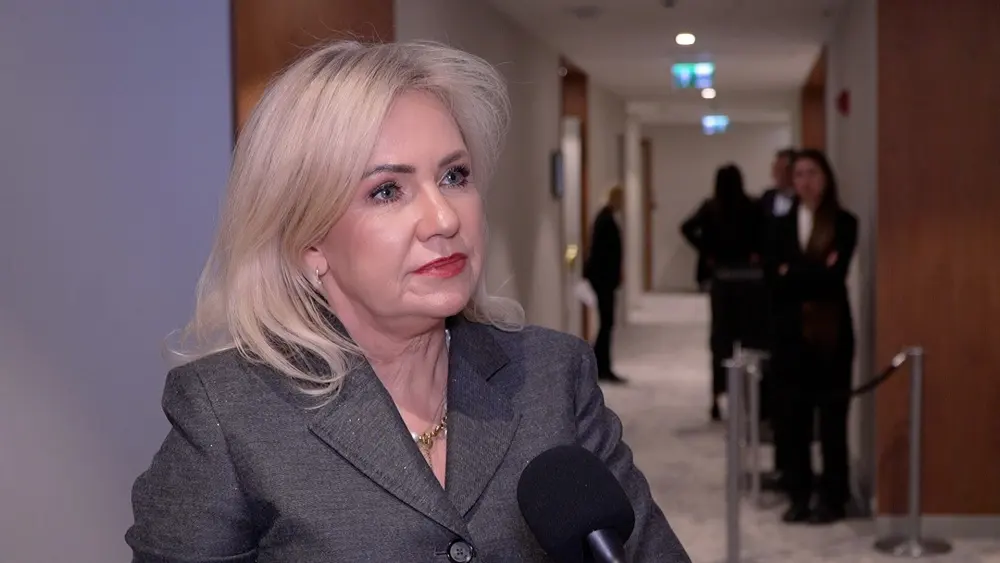
“Ten or fifteen years ago, spinal muscular atrophy — especially type 1 — carried an enormous risk of death. Today, thanks to new therapies, it has moved from a fatal disease or one leading to severe disability toward a chronic condition,” Prof. Maria Mazurkiewicz-Bełdzińska of the Medical University of Gdańsk told Newseria.
Three disease-modifying therapies are available in Poland
SMA is a rare genetic disease in which motor neurons responsible for muscle function progressively die. In Poland it occurs in roughly one in 7,500 newborns. The most severe form, SMA type 1, usually becomes apparent during the first months of life.
Before disease-modifying therapies became available, children with SMA type 1 typically did not acquire the ability to sit independently and many died or required permanent ventilation before the age of two.
The first disease-modifying therapy, nusinersen, was authorised in the European Union in 2017 and has been available to Polish patients through a reimbursement programme since 2019. Since September 2022, the programme has also included gene therapy and an oral medicine. Poland therefore now offers three disease-modifying treatment options across different SMA types, ages and levels of functional impairment.
Long-term trials show major changes in outcomes
Polish researchers and patients have participated in international clinical trials that helped establish the therapies now used in routine care.
In the FIREFISH study, 62 infants with symptomatic SMA type 1 started treatment between one and seven months of age. Fifty-two completed five years of treatment. After five years, 90% were alive and 80% were alive without permanent ventilation. Fifty-nine percent could sit without support for at least 30 seconds, 7% could stand without support and 10% could move with assistance. The final results were published in 2026 in The Lancet Child & Adolescent Health, with Prof. Mazurkiewicz-Bełdzińska as first author.
The RAINBOWFISH study focused on infants treated before symptoms developed. Twenty-six babies with genetically confirmed SMA began risdiplam between the first and 42nd day of life. After 12 months, 81% could sit independently for at least 30 seconds, 54% could stand independently and 42% could walk. All 23 children who completed 24 months of follow-up were alive without permanent ventilation or feeding support.
Newborn screening moves treatment before symptoms
Poland began introducing newborn screening for SMA in 2021 and expanded it nationwide in March 2022. The first-stage result and verification have been available at an average age of 8.5 days, with confirmatory results at 14.7 days. Treatment has started at an average age of 22 days.
Children identified before symptoms who have two or three copies of the SMN2 gene may qualify for one-time gene therapy. However, it cannot always be administered immediately. High levels of antibodies against the AAV9 viral vector or low body weight can delay treatment.
Bridging therapy can prevent treatment delays
In March 2026, Poland’s coordinating team for SMA treatment recommended that presymptomatic children with two SMN2 copies begin therapy without delay. If they are waiting for gene therapy, they should receive bridging treatment in the meantime. The same approach is recommended for eligible children with three SMN2 copies.
A team at the Medical University of Gdańsk has used bridging therapy in infants who could not receive gene therapy immediately because of low body weight or high AAV9 antibody levels. Treatment lasted one month in one child and five months in the other, with improvements of four to six points on the CHOP-INTEND motor-function scale during that period.
“Time is motor neuron. Every day to treatment matters because we do not know how quickly motor neurons will be lost in an individual patient,” Mazurkiewicz-Bełdzińska said.
The combination of screening, earlier diagnosis, several treatment options and bridging strategies has fundamentally changed the outlook for children born with SMA in Poland. Specialists now increasingly focus not only on survival, but on motor development, independence and long-term quality of life.
Source: Newseria / Medical University of Gdańsk.