

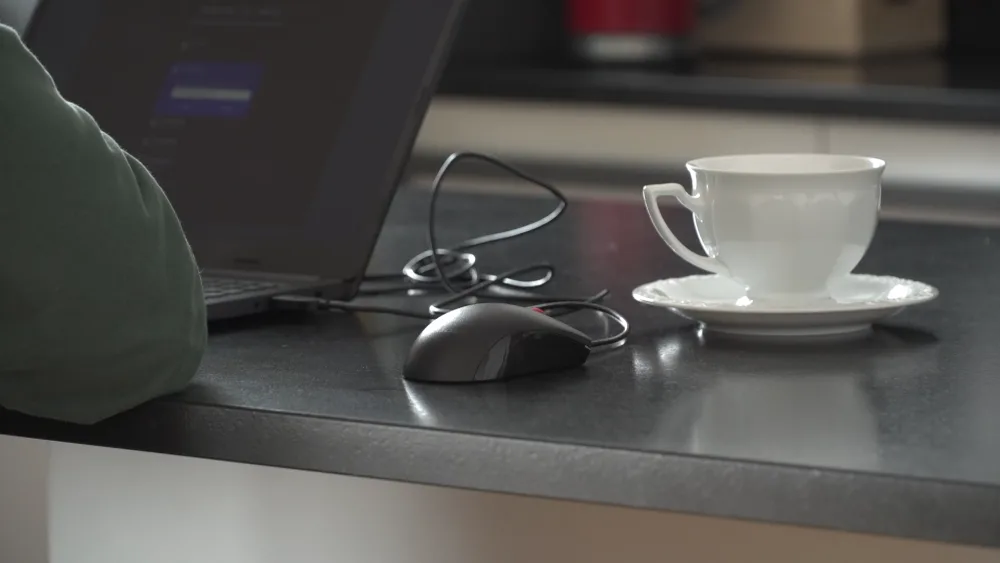
Making coffee, turning on music, tidying a desk or putting a phone away: simple, repeated actions can make it easier to start working or studying. A survey commissioned by Orbit among Poles aged 18–35 found that 43% have their own ritual for beginning their tasks. Their surroundings also matter when getting started feels difficult: 69% of respondents who sometimes postpone work or study change something around them at least occasionally.
The most common habit before starting work or study is preparing a drink, reported by 33% of respondents. Another 31% get the necessary materials and tools ready, while 28% tidy their desk or immediate surroundings. One in five silences or puts away their phone, and 18% turn on music or other chosen sounds.
“A ritual can signal that we are moving from one mode to another. This is particularly helpful when we work or study at home and do not have a clear boundary such as leaving for the office. Preparing a drink, tidying a desk or putting a phone away helps us tell ourselves: ‘I am starting now.’ The important thing is that preparing for work should not take longer than the work itself,” psychologist Magdalena Chorzewska told Newseria. “If we clean the entire flat before starting work, that is no longer a ritual but another way of putting things off.”
Creating a boundary when working from home
A Eurofound report published in July 2026 found that remote work can make it easier to reconcile professional and personal responsibilities. However, compared with people working exclusively at their employer’s premises, remote workers are more exposed to longer hours, work during their free time, irregular schedules, insufficient rest and pressure to remain constantly available. Setting a boundary between work and leisure can therefore be particularly important.
“There is no single stimulus that helps everyone concentrate. For one person, a familiar taste and a moment with a cup of coffee signal the start of an activity; for another, music, silence or fresh air serves that purpose. What we need at a particular moment also matters: sometimes we want stimulation, and sometimes we want to reduce sensory overload. Instead of copying other people’s methods, it is better to notice what makes it easier for us to take the first step,” Chorzewska said.
The survey, conducted by Opinia24 among more than 1,000 young people in Poland who work or study, also examined which aspects of their surroundings help them focus. Fresh air was mentioned most often, by 28%, followed by sounds such as music, background noise or silence, at 27%, and the immediate environment—including tidiness, colours and lighting—at 26%. A particular taste helps one in five; a similar proportion pointed to body position or the ability to move.
Starting with one clearly defined task
“It helps to know exactly what we want to focus on. It is easier to begin with one clearly defined task than with a general resolution such as ‘I need to get a lot done today.’ It also helps to limit regular distractions, such as phone notifications, and look after basic needs, including rest and the opportunity to take a break. Concentration does not mean that nothing ever distracts us. It is more about noticing the distraction and being able to return to the task,” the psychologist explained.
One simple exercise that can be used after losing focus is the 5–4–3–2–1 technique. It involves noticing five things we can see, four we can touch, three sounds we can hear, two smells and one taste. Its purpose is to direct attention towards sensations experienced in the present moment.
“You can do this exercise at your desk, before studying or during a short break. Notice objects in the room, sounds outside the window, the texture of your clothes, the smell of a drink or the taste of chewing gum. The point is not to perform the technique perfectly. It is to step out of the flood of thoughts for a moment and bring your attention back to what is happening now. We all respond to stimuli slightly differently, so it is worth checking whether, at a given moment, we need silence, movement, fresh air, sound or taste,” Chorzewska said.
Small changes can make restarting easier
Small rituals can also help people return to interrupted work or study. In the survey, 37% tidy their space, 33% turn on music, 32% open a window and 31% change their body position.
“Our surroundings can help us a great deal because they affect how much effort it takes simply to start a task. When the things we need are close at hand, the lighting suits us and our phone is not constantly attracting our attention, it is easier to get going. This does not have to mean a separate study or a perfectly arranged desk. Sometimes it is enough to move closer to a window, air the room, prepare materials or find a more comfortable position. It is best to treat the space as something we can adapt to ourselves and the type of task,” she said.
The survey accompanies the Orbit Work & Study prize draw, which offers prizes including vouchers to transform a workspace or study area. Entries require proof of purchase of at least one Orbit, Refreshers, Airwaves or Hubba Bubba product and can be submitted until 18 October.
Source: Newseria.