


Respiratory syncytial virus, or RSV, places a major burden on Poland’s healthcare system during the autumn and winter season. Rising infection numbers translate into more primary-care visits, diagnostics, specialist consultations and hospital admissions. The highest costs are generated by the treatment of young children, especially stays in intensive care units. Experts argue that broader prevention could reduce both the health and financial burden.
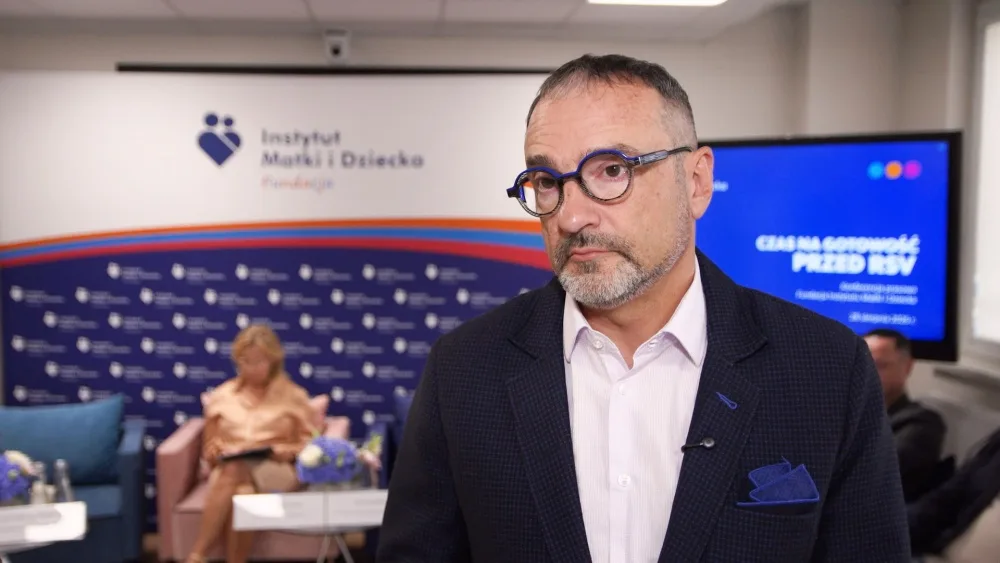
Professor Marcin Czech, head of the Hospital Infection Control Team at the Institute of Mother and Child, told Newseria that RSV infections create substantial staffing and financial pressure across the healthcare system. During the infection season, the number of consultations rises sharply, while tens of thousands of hospital admissions generate the largest share of costs.
The strain is particularly visible when RSV circulates at the same time as influenza and COVID-19. Within a few weeks, paediatric wards can see a sharp increase in the number of children requiring medical care. At the peak of the season, hospitals may face shortages of paediatric and intensive-care beds, while transferring patients to other facilities is not always possible.
According to the report “Infant RSV Readiness Compass,” more than 20,000 children under the age of five were hospitalised in Poland because of RSV in the 2022/2023 season.
Prevention could reduce hospital pressure
Marek Augustyn, deputy president of the National Health Fund, said hospitals can anticipate the peak infection period and should prepare before the season begins. He added that international experience shows that prevention introduced early in life can produce both health benefits and financial savings.
Across Europe, 23 countries recommend some form of RSV protection for infants and 19 finance it from public funds, according to the same report. Early analyses from those programmes indicate lower numbers of severe infections and hospital admissions, including intensive-care treatment.
Chile is often cited as an example. In 2024 it became the first country in the Southern Hemisphere to introduce universal infant immunisation with nirsevimab. According to analyses of national registers, the programme prevented more than 59,000 paediatric ward bed-days and more than 25,000 intensive-care bed-days. The programme cost USD 45.28 million, while the net benefit was estimated at USD 23.5 million.
Czech noted that studies from the United States, Chile and European countries suggest that broad protection can either generate direct savings or remain cost-effective even where total spending does not fall.
Most hospitalised infants had no known risk factors
The issue is important because most children who later require hospital treatment are not necessarily identified in advance as high-risk patients. The RSV readiness report estimates that newborns and infants accounted for 70–80% of children hospitalised because of RSV in the 2022/2023 season. At the same time, almost 95% of hospitalised infants had no recognised risk factors for severe disease before infection.
That means a prevention strategy focused only on premature babies and selected high-risk groups does not cover most children who may later require hospitalisation.
Poland does not currently have a universal RSV prevention programme covering all infants. Palivizumab is financed under a drug programme for premature babies and selected risk groups, but requires repeated doses during the season. Another option is vaccination during pregnancy, which allows antibodies to pass through the placenta and protect the child during the first months of life.
Professor Maria Borszewska-Kornacka of the Medical University of Warsaw said maternal vaccination is valuable but does not fully solve the problem for premature babies, who can be born before sufficient antibodies are transferred.
Nirsevimab is under reimbursement review in Poland
Nirsevimab is a long-acting monoclonal antibody administered directly to the infant. A single dose is designed to provide protection for around five months, covering the typical RSV season.
The product is currently undergoing the reimbursement process in Poland. At the end of July 2026, the Transparency Council of the Agency for Health Technology Assessment and Tariff System considered reimbursement under a drug programme justified. The agency also assessed a proposal for pharmacy reimbursement for children born outside the infection season and published recommendations on 4 August. The final decision will be made by the Ministry of Health.
Experts suggest that where possible, the antibody could be administered in neonatal wards during the RSV season, while infants born outside the season could receive it through primary care or pharmacy reimbursement if approved.
The economic effects extend beyond hospitals. When a child becomes ill, parents often have to take time off work, meaning costs are also borne by employers, the social insurance system and families themselves.
Source: Newseria Biznes.



