
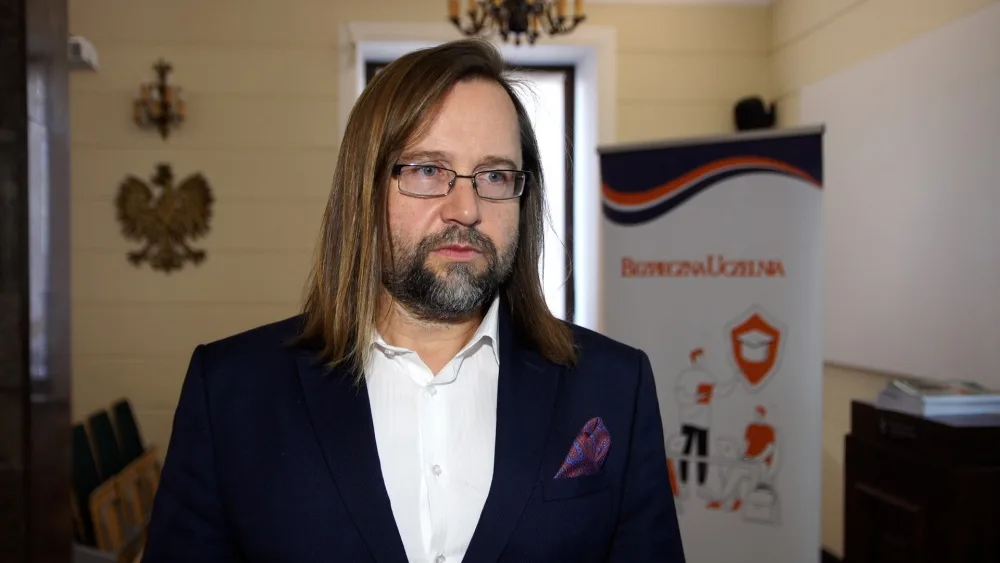


63.5% of university employees and over 40% of students in Poland have encountered mobbing. A series of alarming studies and media reports on the issue has pushed the academic community to intensify its efforts to prevent and combat such behavior. Some universities have already implemented anti-mobbing procedures, while others are developing them. The “Safe University” project aims to collect and widely disseminate good practices in this area. Several months of work show that university leadership, employees and students all need more knowledge on this subject and are actively seeking it.
“The findings on mobbing at universities are shocking. I had always believed that academia—the cradle of the elite, a place for the exchange of ideas—was a safe haven. Unfortunately, research shows that mobbing does occur, and its scale is significantly greater than among ‘ordinary’ employees,” says Marcin Stanecki, Chief Labour Inspector, in an interview with Newseria.
According to the study Workplace Safety in Poland 2025. Mobbing, Depression, Stress 2.0, conducted by SW Research for the Safe at Work Coalition, 15% of employees experienced mobbing multiple times in their career, and 37% experienced it once or twice. The Mobbing Map of Polish Universities prepared by Science Watch Polska found that in 2022 two-thirds of academic community members encountered mobbing at work. An analysis of over 1,800 surveys showed that the groups most exposed to mobbing were assistant professors (23.4%) and non-teaching staff (12.2%). The most common forms of mobbing reported included gossiping, undermining decisions and publicly criticizing work.
“Research shows that every second student has experienced, witnessed, or directly encountered mobbing or discrimination. These results are alarming and clearly indicate that we must act—what we’ve done so far simply isn’t working,” says Wiktoria Nowak, a student representative at the University of Warsaw.
According to the 2021 report Mobbing at Higher Education Institutions by the Analysis Center of the Independent Students’ Association, over 40% of surveyed students encountered mobbing-related behavior at their university. 32% personally experienced such behavior, 9% witnessed it toward others, and another 13% knew someone who had experienced it. The study also found that 42% of students took no action due to fear of consequences. 32% did nothing because they believed reporting would not change anything. Only 20% decided to report mobbing incidents.
“Students often do not react to mobbing or discrimination because they’re afraid. And that’s understandable—they are at the bottom of the university hierarchy. They fill out evaluation surveys, and then the professor who engaged in mobbing continues to teach them for three more semesters. Clear anonymity procedures would be extremely helpful. Students wouldn’t fear that reporting abuse means failing exams later. They are brave and setting good trends, but we cannot expect heroism from everyone,” says Nowak.
The situation is similar for young university employees.
“Young people clearly notice inappropriate behavior that may indicate mobbing. There is broad agreement that we must talk about it and raise awareness—just as young workers entering the job market should know their labor rights, they should also understand what constitutes unacceptable behavior,” says Prof. Jacek Męcina of the University of Warsaw, head of the Safe University project. “Universities must be prepared not only to hold debates but also to respond effectively. This means clear procedures and a place to seek help. That is the absolute minimum that every Polish university must ensure.”
“If we know things are bad, we need to act. Implementing anti-mobbing procedures, including hotlines, is essential. Universities can adopt solutions already used in private companies—psychological support, frequent surveys to monitor workplace atmosphere,” says Chief Labour Inspector Stanecki.
According to the Report on Anti-Mobbing Procedures at Polish Public Universities by Science Watch Polska (2019), 21.74% of the 69 surveyed universities had no internal anti-mobbing procedures, while 8.7% were working on them. This situation is now improving, and university management is more aware of the issue and the need for action.
“There is no better tool than discussions and debates that raise awareness and help implement procedures—both formal ones, such as anti-mobbing regulations, and informal ones, such as identifying trusted contact persons for those who feel uncomfortable or threatened,” says Prof. Męcina.
In June this year, the project University – A Space Free from Mobbing and Discrimination was launched, funded by the Ministry of Science and Higher Education. Its goal is to support universities in creating safe working environments and analyze how they address mobbing and discrimination.
“The Safe University project has shown how necessary all these activities are. On one hand, it strengthened anti-mobbing and anti-discrimination initiatives at universities; on the other, it showed that universities must be actively involved in combating this issue. A key element will be the Safe University competition—we want to identify good practices and share them throughout the academic community, helping universities promote and popularize such initiatives,” says Prof. Męcina. “Universities are slowly maturing to the point of acknowledging: we have nothing to fear, we will evaluate ourselves and show what we have done so far.”
As part of the project, practices and anti-mobbing/anti-discrimination procedures at Polish public and private universities are being analyzed. The results will form a good-practice guide summarizing the best strategies and concrete actions already implemented.
“There is great interest in discussions, conferences and the set of good practices we plan to publish in 2026. Many universities tell us they are waiting for it because they currently have no solutions in place and want to learn how to improve their academic work and study culture,” says Dr. Marta Seredyńska from the University of Warsaw, project coordinator.
She adds that student interest is also very high.
“I believe we need to include topics such as mobbing, discrimination and inappropriate behavior in the curriculum. Together with Prof. Męcina, we are piloting conversational classes on mobbing and discrimination. I’m pleasantly surprised—the group we planned has doubled in size. Students are extremely interested,” Seredyńska says. “Many students are already active in the job market. In class, they talk about their experiences with harmful or abusive situations—often without yet having the vocabulary to describe them.”
Combating mobbing is one of the priorities of the Ministry of Science and Higher Education. A dedicated team is working on good practices to improve the psychological well-being of students and researchers, as well as anti-mobbing initiatives. The ministry has announced that the team will meet on 24 November to summarize its work to date.



