
A good idea alone is not enough to build a startup, experts at PARP Future Camp 2026 emphasised. Before forming a company, a founder should establish whether the product addresses a real need, whether customers will pay for it and whether the promised value can actually be delivered. A team with complementary skills and support from experienced mentors are equally important as the business develops.
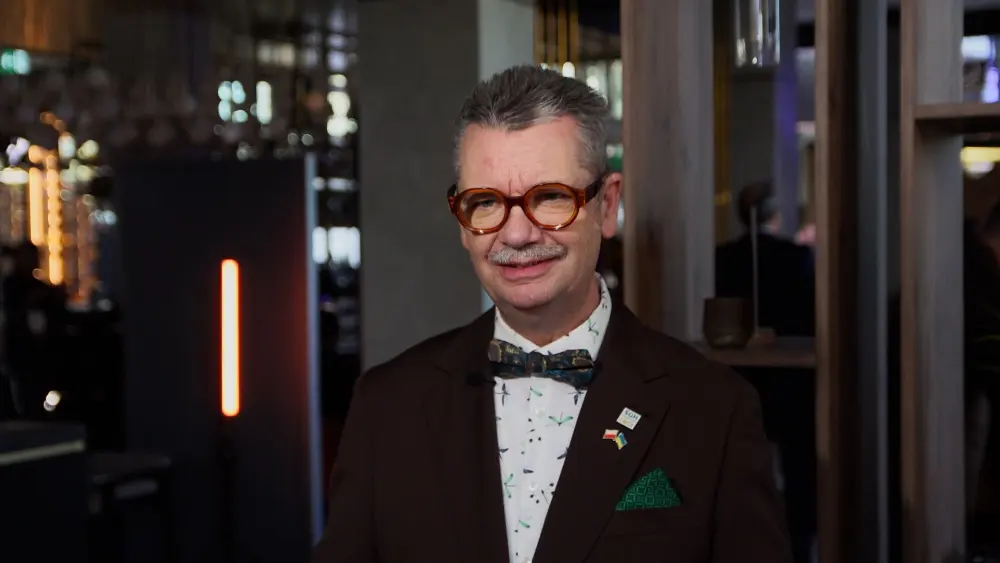
“A founder’s first step should be a business experiment: a framework of activities that helps establish whether the idea will sell and whether enough people will want to buy it. We also need to check whether we can really deliver the value we promise the market. Only after confirming that would I suggest taking further steps towards setting up a company,” Łukasz Sztern of the Polish Development Fund told Newseria.
Market validation should come before major commitments
The Polish Development Fund’s report on barriers facing Polish startup founders identifies poor product–market fit, insufficient interest from potential customers and the lack of a strategy after completing a support programme among the problems cited by graduates of its School of Pioneers.
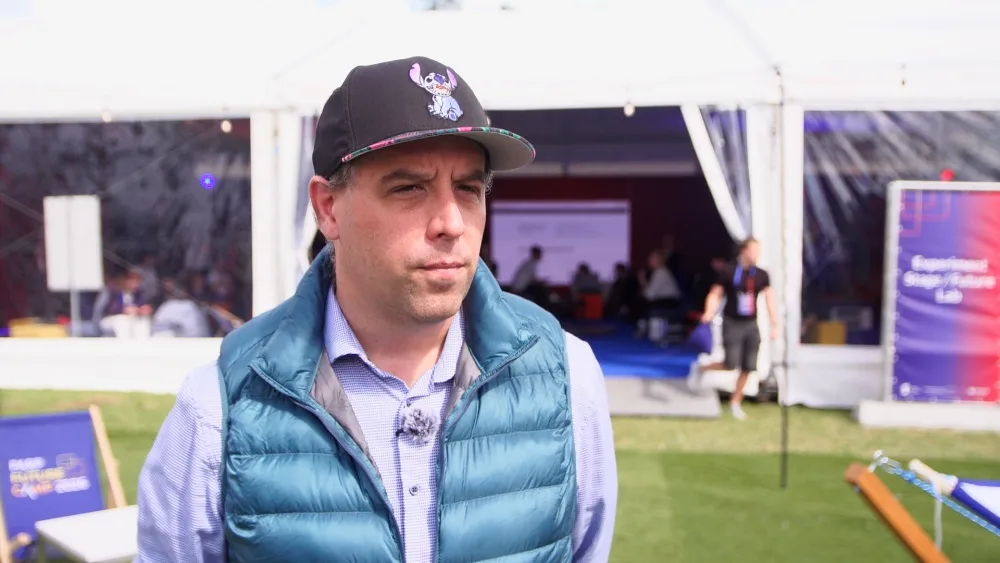
Maciej Majewski, president of Accelpoint, used an anecdote about Churchill and his generals to illustrate the difficulty of judging ideas before testing them. “We can have countless business ideas every day, but until we test them in practice, we cannot be sure whether something will catch on in the market,” he said.
Majewski argued that founders should carry out market validation themselves as early as possible, rather than outsource it. Everyday problems can be a useful starting point, provided the potential market is not excessively narrow.
Capital and skills remain major barriers
The “Global Entrepreneurship Monitor. Poland 2025” report, prepared by PARP and the University of Economics in Katowice, identifies lack of capital as a key barrier to starting a business. Almost 70% of the startup representatives surveyed considered it very important, while the remaining 30% assigned it at least moderate importance.
The analysis also points to interconnected obstacles: a shortage of business-management skills, insufficient industry or specialist knowledge and the absence of a business idea.
“Nobody is usually an expert in everything. If you have a good technological or market idea, it is worth finding someone whose skills and personality complement the founder,” Sztern said. He noted that a strong researcher may need support with sales.
Startup Poland’s “Polish Startups 2025” report shows that most domestic startups have teams of no more than ten people. In 20% of cases, nobody is employed apart from the founder.
“Not every founder has to be the frontman. Startups are built by people who combine different competencies,” said Hubert Adamczyk, an expert at the Polish Agency for Enterprise Development. One founder may focus on programming while another understands the business model and promotion. He added that social media can help reach potential customers and present a product authentically.
Poland has relatively few young businesses
GEM Poland 2025 data show a marked change in entrepreneurship over 14 years. The share of adults running young businesses, operating for no more than 3.5 years, fell from 9.1% to 2.5%. At the same time, the share running established businesses increased from 5% to 12.8%.
Poland had the lowest share of adults running young businesses among the 51 countries examined.
Aleksandra Pędraszewska, a partner at Vastpoint Ventures, said earlier generations of founders relied heavily on technological skills. Today, there is greater awareness that building good technology and building a product that sells are different tasks.
“Creating products that sell well, testing assumptions about what we should sell and at what price, is something today’s founders are getting better at,” she said. They can learn from entrepreneurs who have already succeeded, whether they returned to Poland or built their companies there from the outset.
Mentoring matters in the age of AI
Pędraszewska said new founders still face familiar questions: finding the right customer and establishing who actually needs the product. AI makes software development easier, but it does not remove the need to define the product carefully.
“At a time when many products and software applications are created using AI, a major challenge is defining the product properly, rather than simply creating AI slop that results from poor decisions about whom and what we want to sell,” she said.
PARP programmes support testing and incubation
PARP’s support programmes help entrepreneurs validate ideas, develop products and business models, and then look for customers or investors.
The Innovator’s Laboratory programme is aimed at people with innovative ideas who have not yet reached the company-development stage. Participants receive free expert and mentoring support. Their ideas are assessed from a business perspective and tested against market conditions, including discussions with potential customers, before larger spending becomes necessary.
Startup Platforms take founders further, from an idea to a product that can be offered on the market. Through an individual incubation programme, participants work with an incubation manager, experts and mentors on product development, the business model and an initial product version.
After incubation, companies can apply for up to PLN 600,000 for further development under a separate programme component.
This material was produced during PARP Future Camp 2026, an event co-financed through the European Funds for a Modern Economy (FENG), European Funds for Eastern Poland (FEPW) and European Funds for Social Development (FERS) programmes.
Source: Newseria. English adaptation of the original report.