
Waste from paper production and the food industry could become a feedstock for chemicals used in pharmaceuticals and cosmetics. Researchers at the Institute of Organic Chemistry of the Polish Academy of Sciences are developing a technology that combines light and electrochemical processes to convert biomass into higher-value compounds.
The long-term goal is an integrated process that can generate electricity and useful organic molecules at the same time, reducing dependence on petroleum-derived chemical feedstocks. The team has already completed initial experiments with simple compounds and is preparing to move toward more complex biomass materials, including lignin.
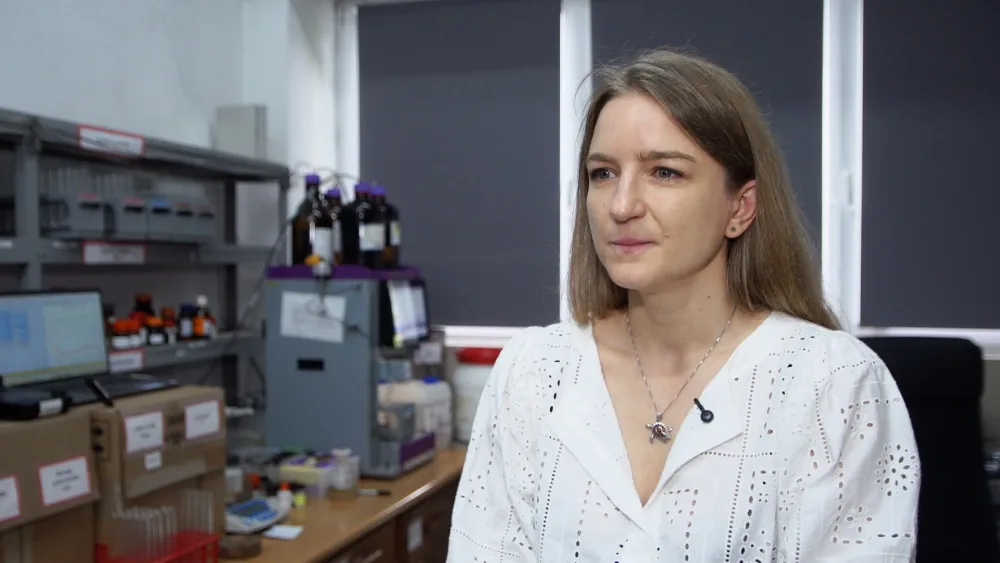
“We use systems similar to those known from photovoltaics, but in our project we want to produce not only electricity but also organic compounds,” project leader Dr Katarzyna Rybicka-Jasińska told Newseria.
Photoelectrochemistry could lower energy demand
The system is based on two electrodes, a cathode and an anode, with one covered by a photosensitive material. Light — potentially including sunlight — excites the electrode and drives electrical current through the system. That energy can then be used to oxidise or reduce organic material.
The researchers expect the use of light to allow reactions to run under milder conditions and reduce the amount of external electricity required. If successful, the approach could make it easier to convert low-value waste streams into compounds used by the chemical, pharmaceutical and cosmetics industries.
The research began in October 2024 and is scheduled to continue until the end of September 2028. The team has already developed several procedures for transforming small organic molecules using both electrochemistry and photoelectrochemistry.
Lignin is the next major target
A key next step will be lignin, one of the main components of plant biomass and a major by-product of the pulp and paper industry. Global lignin production is estimated at around 70 million tonnes annually, yet less than 2% is used to manufacture higher-value products. Much of the remainder is burned for energy at pulp and paper plants.
That makes lignin an attractive test case for circular chemistry. Other research teams are also exploring photoelectrochemical conversion. A 2026 study published in EcoMat described a system for direct oxidation of Kraft lignin that operated for 28 hours, with 80.6% of the total current used for lignin oxidation.
Europe’s paper industry produced 77.4 million tonnes of paper and board in 2025, according to CEPI, meaning that large biomass side streams are already available at industrial scale.
Potential alternative to oil-based chemical feedstocks
The chemical industry remains a major user of petroleum. The International Energy Agency has estimated that industry accounts for around one-fifth of global oil demand and that roughly two-thirds of the oil consumed by the industrial sector is used as a feedstock for chemicals.
The Polish team’s ambition is therefore broader than waste treatment. By combining electricity generation with the production of useful molecules, researchers hope to create a route toward more sustainable chemical synthesis.
“We hope that compounds needed in everyday products, from cosmetics to medicines, can eventually be produced in a more environmentally friendly way and potentially at lower cost because less energy is required,” Rybicka-Jasińska said.
The technology remains at the research stage. Key challenges include moving from model compounds to real biomass, improving catalyst durability, scaling reactors and separating the products generated during the process.
The project, “Photoelectrochemical conversion of biomass – a step towards sustainable synthesis of chemical compounds”, is carried out under the FIRST TEAM programme of the Foundation for Polish Science and has received PLN 3.55 million in funding from the European Funds for a Modern Economy.
Source: Newseria / Institute of Organic Chemistry, Polish Academy of Sciences.