


Poland’s rural areas are increasingly affected by demographic decline. The total fertility rate fell to 1.068 in 2025 from 1.991 in 1990, according to Statistics Poland. Although rural areas still record positive migration balances, deaths continue to outnumber births. Experts warn that planning rules introduced under Poland’s spatial-planning reform may make it harder for young people to return to villages, build homes near their families and expand farms.
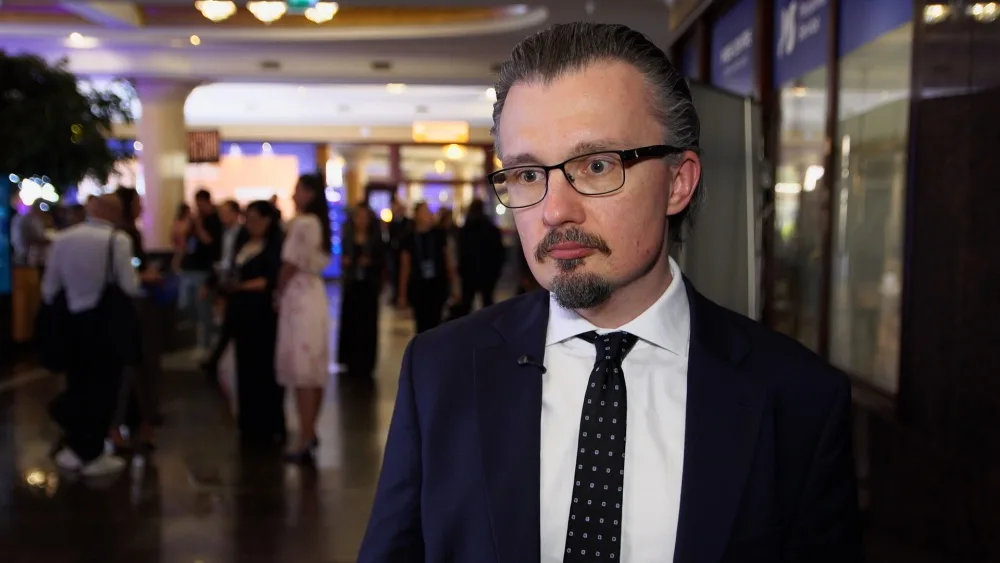
Mateusz Łakomy, a demographic policy expert and programme director at Demograficon, told Newseria that the public debate about demography is often focused on large cities, while rural areas face a different set of problems. One of the most important is access to land for housing and the ability to settle close to family property.
A report by the Jagiellonian Club, “Will the Countryside Disappear from the Plan? How to Deregulate Rules So Poles Can Return to Rural Areas,” notes that around 41% of Poland’s population lives in rural areas, compared with 17% in the country’s ten largest cities.
Statistics Poland data show that more than 404,300 people changed their place of permanent residence in 2025 by moving to another municipality, from a city to the countryside or in the opposite direction. Rural areas recorded a positive migration balance of more than 36,100 people. At the same time, however, the number of deaths exceeded births there by around 56,000.
Planning rules may reinforce demographic decline
The concern centres on municipal general plans, a new planning instrument introduced as part of the spatial-planning reform. They replace previous studies of development conditions and directions and divide municipal territory into zones governed by different development rules.
A key mechanism is the so-called capacity balance. Municipalities designate zones where residential development is allowed, but the amount of undeveloped land available for housing must broadly correspond to projected demand. That demand is calculated using a national formula based on demographic forecasts over a 20-year horizon.
Critics argue that this creates a paradox for areas already losing population. Municipalities with the weakest demographic outlook receive the most pessimistic forecasts and therefore have less room to designate new residential land. In some cases, that may make it harder for younger farmers or people returning from cities to build homes near their parents or expand existing farmsteads.
Łakomy said this is especially problematic for people who studied in larger cities and later want to return to their home regions. They may have agricultural qualifications, family land and a willingness to take over a farm, yet still face planning barriers when trying to build a house or extend an existing holding.
The same rules apply to very different municipalities
The reform is intended to curb uncontrolled urban sprawl and limit chaotic development. Experts from the Jagiellonian Club acknowledge that this objective is justified in fast-growing metropolitan areas, but argue that the same mechanisms do not necessarily fit remote rural municipalities that are struggling with depopulation.
Open zones, which include agricultural land, do not in their basic profile allow residential development or buildings connected with agricultural production. According to the report, this could limit investment and weaken the development potential of some rural areas.
The authors also criticise the uniform approach applied to municipalities with very different demographic and economic conditions. A municipality directly bordering Warsaw may be trying to control excessive population inflows, while a municipality 100 kilometres away may be trying to keep enough residents to sustain local services and tax revenues.
Łakomy argues that demographic policy should therefore take geography into account. Large cities, suburban belts and peripheral rural areas face different challenges and need different planning responses.
Young returnees can strengthen local economies
Experts point out that young people returning from cities can bring new skills, business networks and demand for more advanced services. Their return can also support family formation, especially when they are able to live close to parents and relatives who can help with childcare.
If housing and investment barriers become too high, some villages may lose population more quickly and become increasingly dominated by older residents. From the perspective of local governments, that would mean a weaker tax base and higher costs of maintaining services for a shrinking population.
Municipalities were required to adopt general plans by 31 August 2026. Deputy Development and Technology Minister Tomasz Lewandowski recently told parliament that, based on provincial official journals, 946 municipalities, or 38% of the total, had adopted them. After accounting for applications submitted by 31 August, the number could be closer to 1,100–1,200. Most of the remaining municipalities are at an advanced stage of work, while fewer than 4% had not started the process at all.
Source: Newseria Biznes.



