


After a strong July, August was equally robust. The latest Housing Price Barometer prepared by Tabelaofert shows that around 4,200 new homes were sold across Poland’s seven largest residential markets in August, nearly 50% more than a year earlier.
The market data are consistent with developers’ own perceptions. In the latest Developer Sentiment Index, as many as 57.5% expected sales to increase.
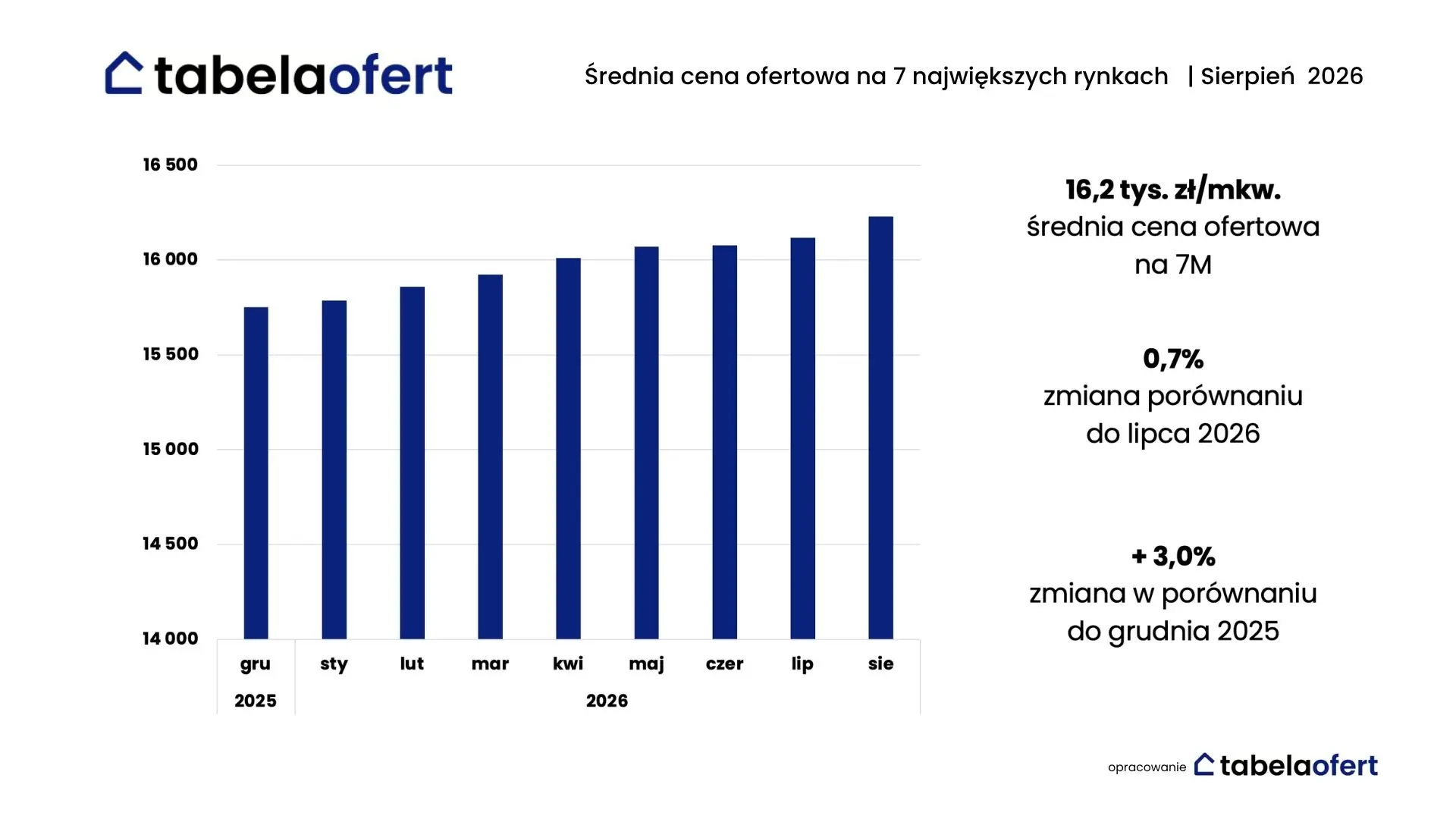
With buyer activity remaining high, prices also started moving upward. The average asking price rose by 0.7% in the latest month and by 3% since the beginning of the year.
“A year-on-year sales increase of nearly 50% sounds very strong, but what matters more is that sales have remained high for a second consecutive month despite the holiday season. That shows demand has returned to the market. Buyers are finding products that fit both their needs and financial capacity, while the large supply of completed homes helps them make decisions,” says Robert Chojnacki, founder of Tabelaofert.
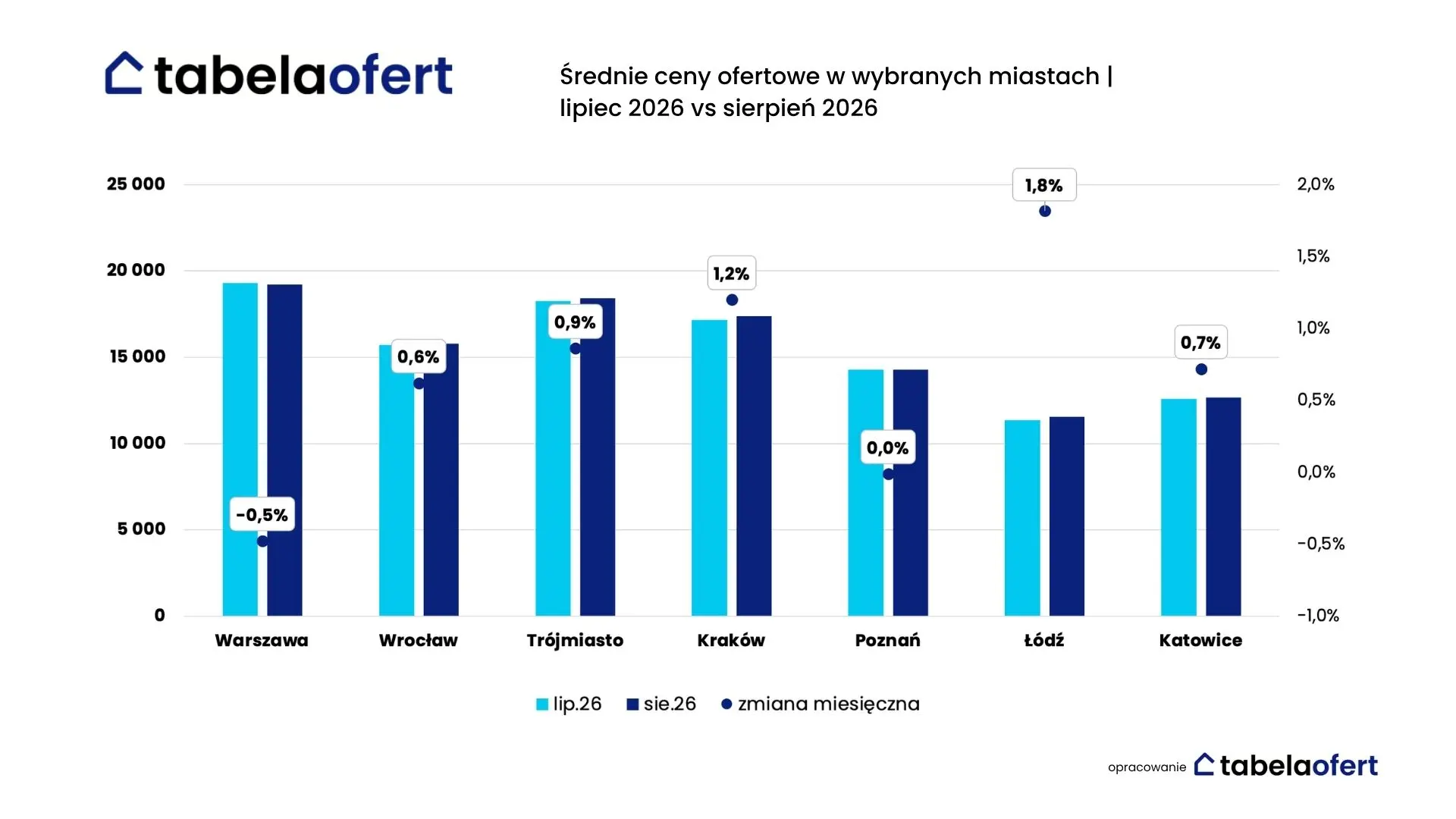
Conditions varied significantly between individual markets. The strongest monthly rise in the average price was recorded in Łódź, where asking prices increased by 1.8%. Kraków followed with a 1.2% increase and the Tricity with 0.9%. Warsaw moved in the opposite direction, with the average asking price falling by 0.5%. Elsewhere, changes were modest: prices rose by 0.6% in Wrocław and by 0.7% in Katowice, while Poznań was virtually unchanged.
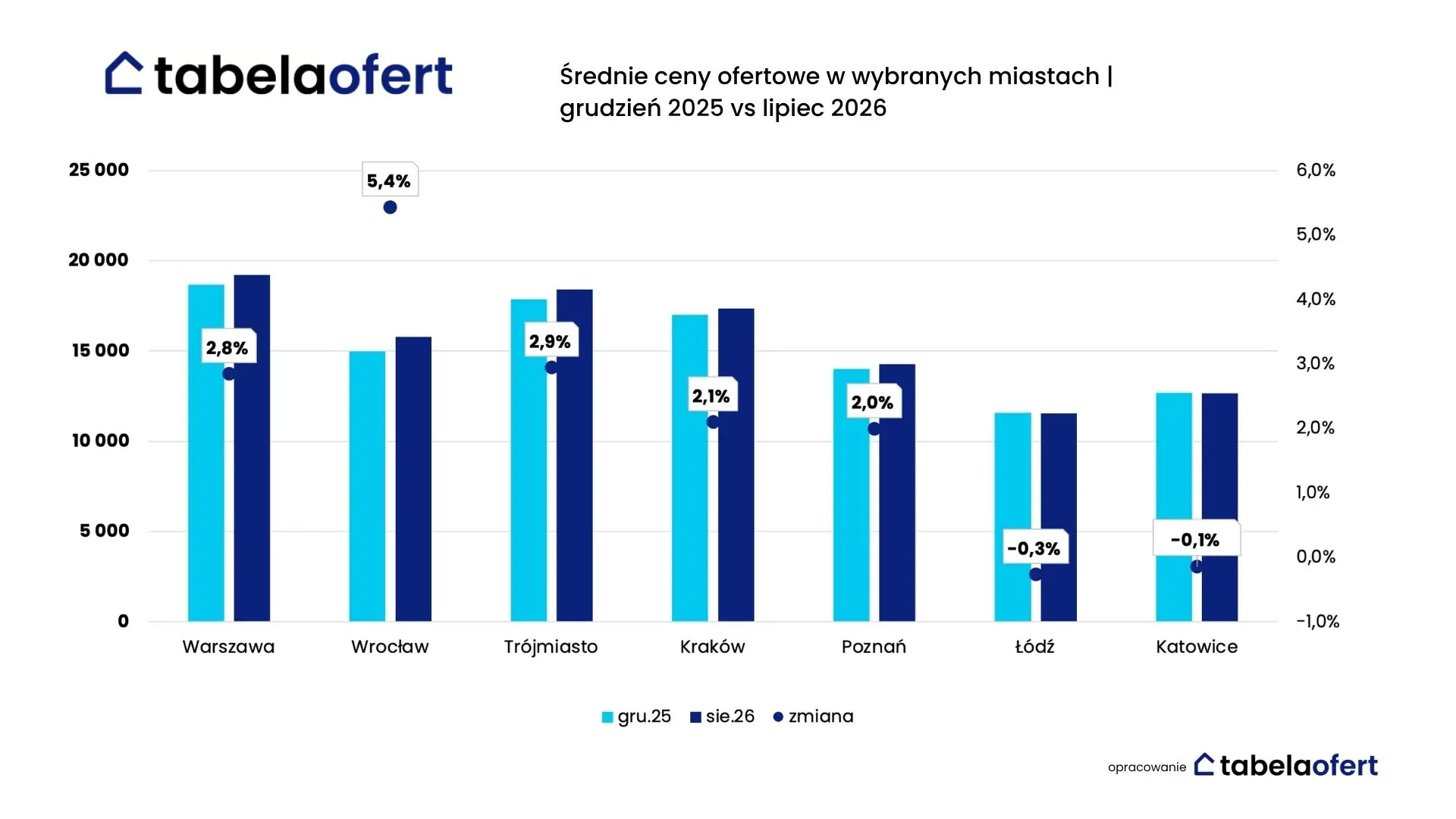
Over a longer horizon, the largest increase in the average asking price since the end of 2025 was recorded in Wrocław, at 5.4%. Warsaw and the Tricity saw increases of just under 3%, while Kraków and Poznań were up by around 2%. In Łódź and Katowice, average prices remained close to their end-2025 levels.
“For buyers, what is happening in a specific development matters more today than the average for the whole city. With a large number of offers available, it is worth comparing not only the price per square metre, but also the apartment layout, standard, completion date and purchase terms. A difference of several percent between projects may now matter more than a monthly change in the average price for the entire market,” says Ewa Palus, chief analyst at Tabelaofert.
More buyers expect prices to rise
The shift visible in market data is also reflected in consumer expectations. An August IBRiS survey for Tabelaofert found that 51% of respondents now expect housing prices to increase in the near term. This is the highest share since the survey began in February, when 38% expected increases.
At the same time, the share of respondents expecting prices to fall declined sharply, from 12% in February to just 5% in August. Another 22% expect prices to remain broadly stable.
Source: Tabelaofert, IBRiS; source article: ManagerPlus.pl.



