
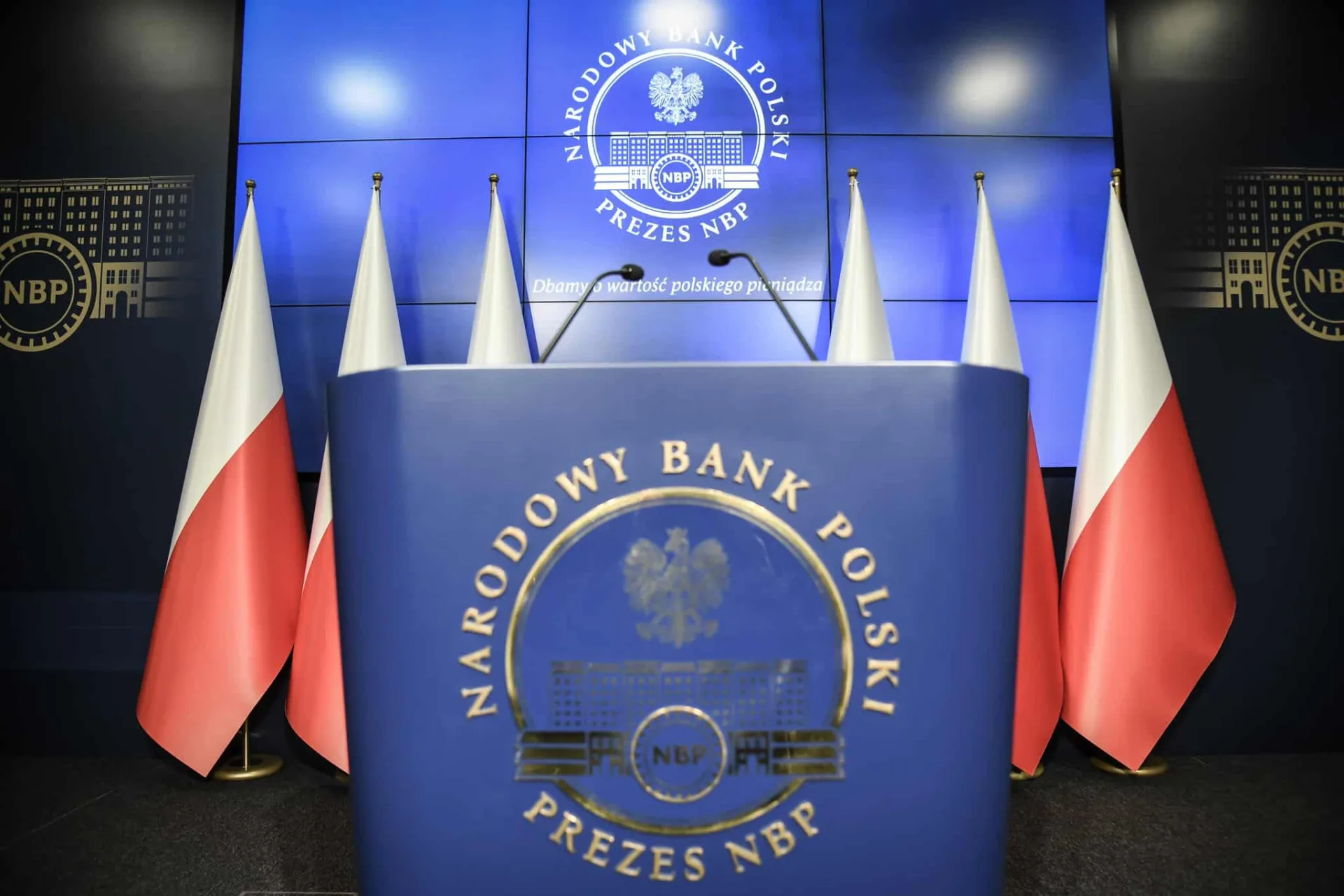


Poland’s Monetary Policy Council (RPP) left interest rates unchanged in September, keeping the National Bank of Poland’s reference rate at 3.75%. The decision was in line with market expectations. The more important question now is what comes next as inflation moves back toward the upper end of the NBP’s target band, energy prices remain elevated and financial markets begin to price in the possibility of rate increases.
RPP leaves the reference rate at 3.75%
The Council decided neither to resume rate cuts nor to tighten monetary policy. The reference rate therefore remains at 3.75%, preserving the level set earlier in 2026.
The September decision itself was not a surprise. Attention is increasingly shifting to whether rates will remain unchanged through the end of the year and whether the next move could eventually be upward rather than downward.
Inflation is again close to the upper end of the NBP target range
Poland’s consumer inflation rate reached 3.4% year on year in August, according to the preliminary estimate from Statistics Poland. The NBP’s inflation target is 2.5%, with a tolerance band of plus or minus 1 percentage point.
The August reading does not by itself imply that higher rates are necessary, but it reduces the room for rapid monetary easing. Policymakers will also be watching the composition of inflation and whether higher energy and fuel costs begin to spill over into transport, services, production costs and wage expectations.
Energy prices make further cuts harder to justify
One of the main constraints on faster easing is the cost of energy commodities. Higher oil and gas prices raise the risk of renewed inflation pressure through fuel prices, transport and operating costs for companies.
For the RPP, that argues for caution. Cutting rates while inflation is again close to the top of the target range could increase the risk that price pressure becomes more persistent.
Markets have started to price in rate hikes
A notable shift has taken place in market expectations. FRA contracts have begun to imply a possibility of a rate increase later in 2026 and further tightening thereafter.
That is a clear change from earlier expectations, when investors were focused mainly on the timing of the next cut. XTB analysts, however, argue that the market may be pricing too aggressive a tightening path and see a prolonged period of unchanged rates as more likely.
What does the decision mean for borrowers?
Because the RPP did not change rates, the September decision should not by itself cause a sudden change in the cost of variable-rate loans. Borrowing costs are nevertheless influenced not only by the current NBP rate but also by market expectations.
If investors continue to anticipate higher rates, the decline in market-based lending rates could slow even before the RPP makes any actual move.
What comes next for Polish interest rates?
For now, a longer period of stability appears to be the most plausible scenario. The RPP is likely to focus on the next inflation readings, wage growth, energy prices and the broader condition of the economy.
Further rapid cuts are more difficult to justify than they were earlier in the year, but a rate increase is not yet a foregone conclusion. If inflation moves decisively above target and becomes broader across goods and services, the case for tighter policy would strengthen. If the energy shock proves temporary and inflation eases again, markets could scale back expectations of rate hikes.
Sources: National Bank of Poland, Statistics Poland, XTB Research. Information is for informational purposes only and does not constitute investment advice.



