


Cyberattacks and sabotage targeting critical infrastructure are a serious threat to Poland’s security. Experts warn that cyber incidents can completely paralyse key areas of state activity. Building resilience therefore depends on training specialists, strengthening education from school level and making it easier for smaller companies to enter the market with dual-use solutions.
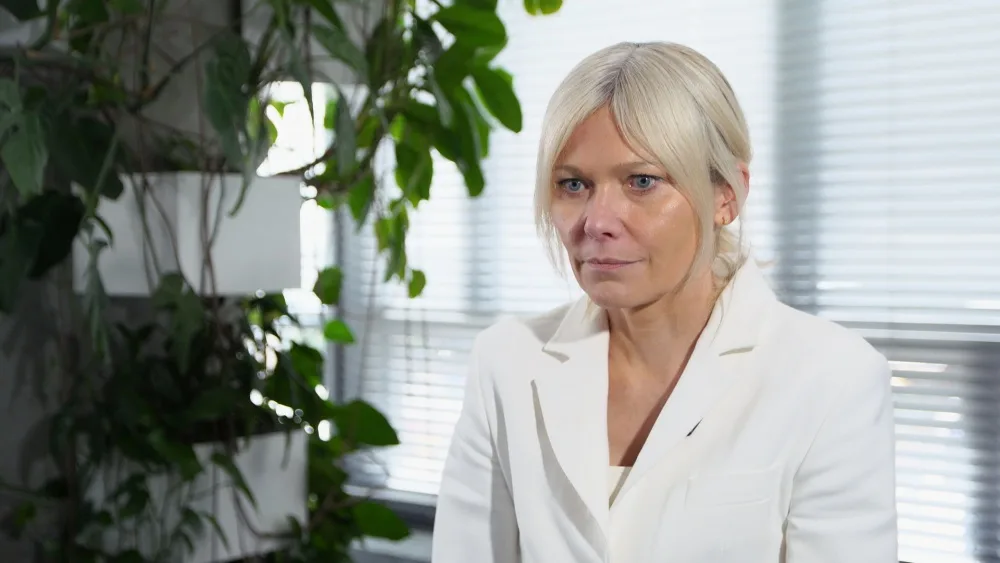
‘Cyberattacks and sabotage against critical infrastructure are among the key threats given the current geopolitical situation, including the war in Ukraine. Sabotage is a long-established form of hostile activity and is increasingly used below the threshold of open war,’ says Dr Karolina Grenda of the SET Foundation.
At the end of December 2025, Poland was hit by a coordinated cyberattack with a sabotage component targeting the energy sector. The incident affected numerous wind and solar farms, a private manufacturing company and a combined heat and power plant supplying heat to nearly half a million customers. The objective was to disrupt energy infrastructure by damaging control systems.
‘Attacks in cyberspace can lead to the complete paralysis of key areas of state activity, and this has already happened in practice. Protecting critical infrastructure and building resilience are therefore essential,’ Grenda says.
The European Union Agency for Cybersecurity, ENISA, identified public administration as the EU sector most exposed to cyberattacks in its Threat Landscape 2025 report, accounting for 38.2% of incidents. Transport followed at 7.5%, digital infrastructure and services at 4.8%, finance at 4.5% and manufacturing at 2.9%.
Grenda argues that Poland has developed significant capabilities to counter cyber threats. She points to the CYBER.MIL.PL programme launched by the Ministry of National Defence, which supported the creation of the National Cybersecurity Centre and later the Cyber Defence Forces.
CYBER.MIL.PL focuses on four strategic areas: consolidating and building cybersecurity structures, education and training, international cooperation, and strengthening the security of military and ministry networks and systems. Poland’s Cyber Defence Forces were formally established in February 2022 and are responsible for defensive, reconnaissance and active operations in cyberspace.
‘The programme has helped build structures and teams with expertise in cybersecurity, cryptology and, increasingly, artificial intelligence,’ Grenda says. She points to the performance of the Polish-Czech team at the international Locked Shields exercise and hackathon.
Locked Shields is one of the world’s largest and most complex cyber-defence exercises. This year 41 countries formed 16 rapid-response teams tasked with defending the infrastructure of the fictional state of Berylia against a coordinated attack from Crimsonia. The Polish-Czech team finished fourth.
Experts also stress the need to develop skills much earlier. ‘Programming and basic cybersecurity should be taught from primary school so that future specialists can later join the state structures responsible for security,’ Grenda says.
The European Commission has also highlighted the changing role of artificial intelligence in cybersecurity. AI can help identify vulnerabilities, prevent cyberattacks and strengthen protection of critical infrastructure, but it can also be used by attackers to automate operations, identify weaknesses and conduct cyber campaigns at unprecedented speed and scale.
‘AI already plays a major role in both offensive and defensive cybersecurity. At the same time, excessive regulation can slow the development of new technologies in some areas,’ Grenda notes.
At the end of June, the Council of the European Union approved a regulation aimed at simplifying selected AI rules as part of the Omnibus VII simplification package.
Another important area is dual-use technology. ‘In the past, technologies often moved from the military into civilian markets. Today the flow increasingly goes the other way: business solutions are being adopted for military applications. The problem is that small companies with strong capabilities often struggle to enter the market because of regulatory barriers and the advantage held by large technology groups,’ Grenda says.
She argues that the state should expand regulatory sandboxes that allow promising smaller companies to develop, validate and test innovative AI systems under supervision, in line with the AI Act framework.
‘I am concerned that there is little time left to prepare the necessary workforce because these threats are materialising now, not in some distant future. Poland needs to integrate the security community and attract experienced experts as well as people just entering the labour market. Education from the ground up is equally important,’ Grenda concludes.



