
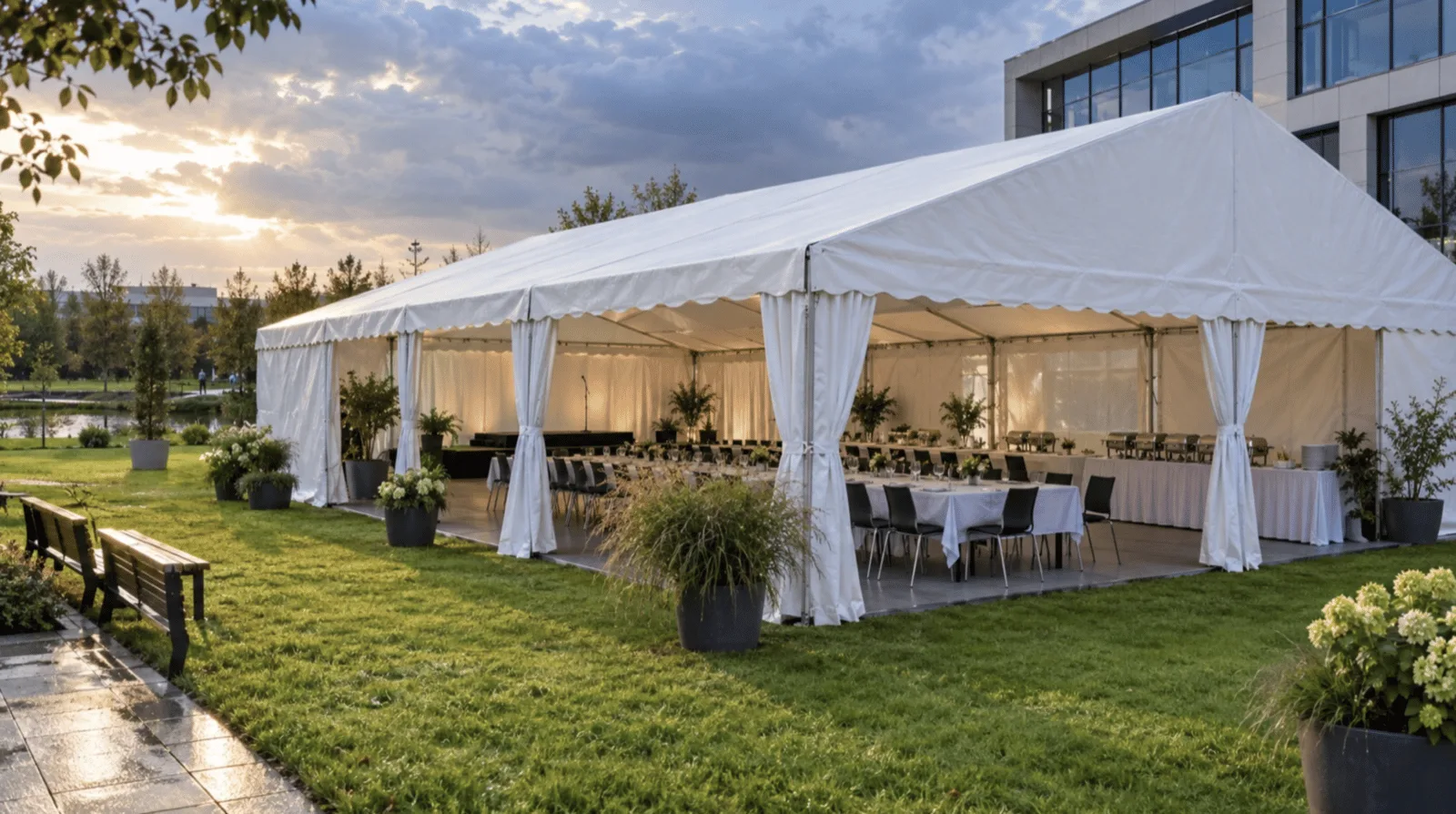


Outdoor corporate events can offer more flexibility than a traditional conference venue, but they also introduce risks that are easy to underestimate. Rain, wind, temperature changes and access to power or sanitation can quickly turn a simple company gathering into an expensive logistical project.
The safest approach is to treat weather protection as part of the core event infrastructure rather than as an emergency add-on. That means deciding early how many guests must be covered, what type of floor is needed and how catering, electricity and technical equipment will function if conditions deteriorate.
A weather plan should be included from the start
Organisers often focus first on catering, entertainment and branding. For an outdoor event, however, the basic protection of guests and equipment should come earlier in the planning process.
A tent or modular covered area can provide a backup without forcing the event indoors. The required size depends not only on the number of people but also on whether the programme includes seated meals, a stage, buffet zones, bars or exhibition stands.
Side walls, flooring, heating or ventilation may also be necessary depending on the season. Each additional element affects transport, assembly time and cost, so it is usually cheaper to include it in the initial specification than to order it at the last minute.
Location affects the real cost of the event
A visually attractive site is not always an operationally efficient one. Access for delivery vehicles, the condition of the ground, distance from parking and the availability of electricity and water can have a major influence on the final budget.
Organisers should check whether the site allows heavy vehicles, whether equipment can be anchored safely and whether additional generators or temporary lighting will be required.
Build contingency into the programme as well as the budget
A weather contingency plan should cover more than rain. Strong wind may restrict the use of lightweight decorations, heat can require additional water and shade, while colder conditions can change catering and heating requirements.
The programme should therefore be designed so that key activities can be moved under cover or shortened without disrupting the entire event. Suppliers should also know in advance who has authority to make weather-related decisions.
Insurance and contracts matter
Before signing contracts, organisers should understand cancellation and rescheduling rules, responsibility for damaged equipment and any weather-related exclusions in insurance policies.
A well-planned outdoor event can be effective and memorable, but the savings associated with avoiding a traditional venue can disappear quickly if weather protection and logistics are treated as optional. The most reliable budget is one that assumes conditions may change and includes the infrastructure needed to keep the event running.



