
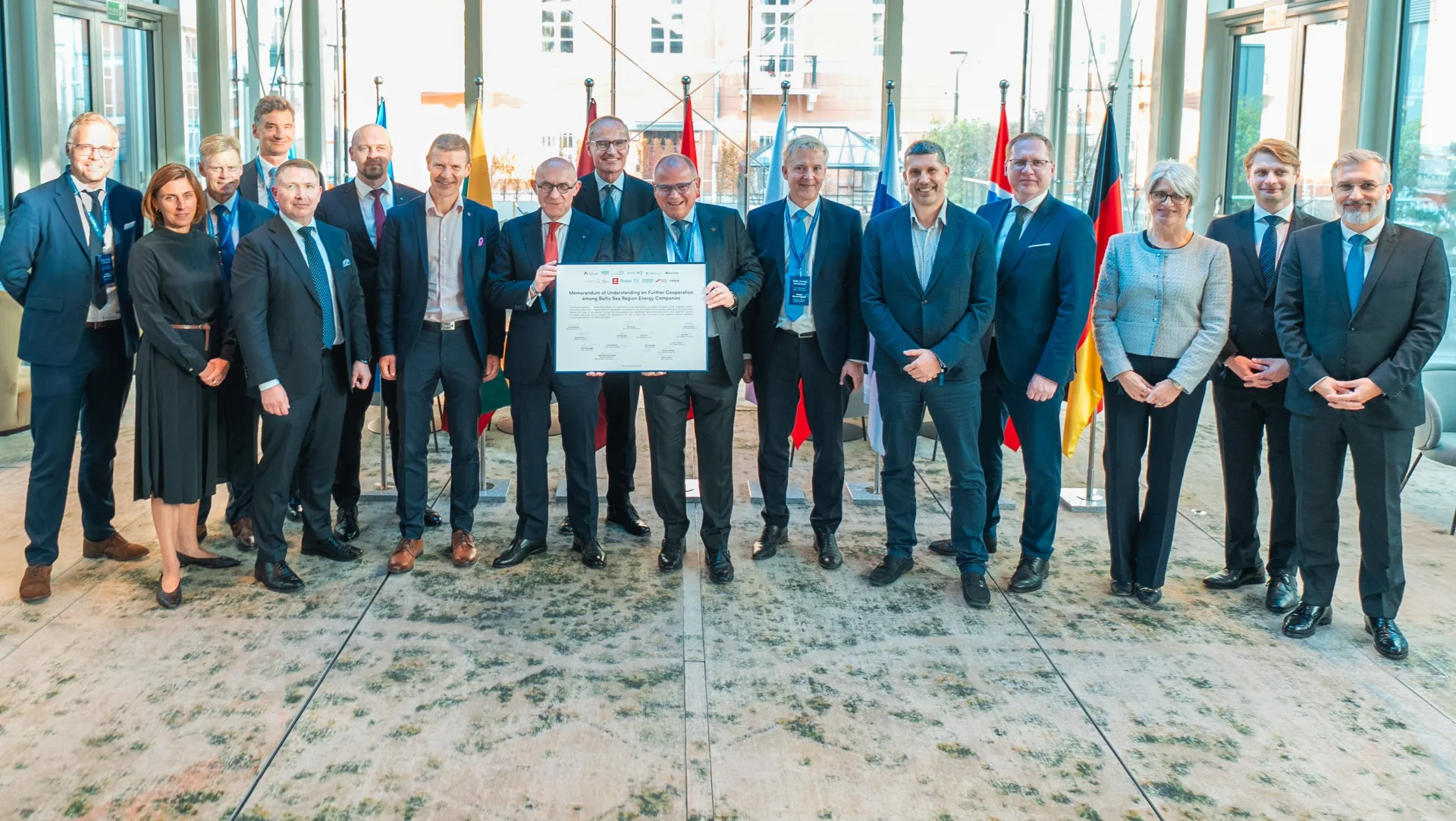


Fourteen companies and organisations from nine European countries have formed the Baltic Energy Initiative, a new platform designed to accelerate cross-border energy projects around the Baltic Sea. The cooperation covers offshore wind, LNG, hydrogen, carbon capture and storage, small modular reactors and the protection of critical energy infrastructure.
The initiative is intended to make it easier for companies to develop projects that extend beyond national borders, coordinate infrastructure and secure financing. The Baltic region is becoming increasingly important for European energy security as countries seek to diversify supplies and expand low-carbon generation.
A regional approach to energy infrastructure
Many of the largest energy investments planned in the Baltic Sea region require cooperation between transmission operators, energy producers, industrial companies and governments. Offshore wind farms need grid connections and interconnectors, while hydrogen and CO2 infrastructure can become economically viable only when developed at sufficient scale.
The Baltic Energy Initiative is therefore expected to focus on identifying projects where regional coordination can shorten investment timelines and reduce duplication of infrastructure. LNG terminals, hydrogen corridors, CCS networks and new nuclear technologies are among the areas where cooperation between countries could be particularly important.
Security becomes part of investment planning
The initiative also places emphasis on the resilience of critical infrastructure. Energy assets in the Baltic Sea have gained strategic importance following Russia’s invasion of Ukraine and a series of incidents involving subsea infrastructure.
For ORLEN and its partners, regional cooperation could strengthen both investment capacity and energy security. The group is simultaneously expanding offshore wind, gas infrastructure and low-emission technologies, making the Baltic Sea one of the key areas of its long-term strategy.



