


Almost half of Polish citizens say they are actively saving money for their retirement, according to the latest survey by ING Bank Śląski. In 2022, this applied to only one third of respondents. Although Poles still worry about health and financial problems after the end of their professional career, the level of anxiety surrounding retirement has dropped noticeably compared with previous editions of the study.
In the 2025 survey, only 33% of respondents said they were afraid of retirement, compared with 42% in 2022 — a decline of nearly one quarter.
“This shows that people are increasingly taking matters into their own hands. As many as 47% of respondents now declare that they are saving with the future in mind — specifically for retirement. Retirement is no longer viewed as something to fear, but as something to prepare for,”
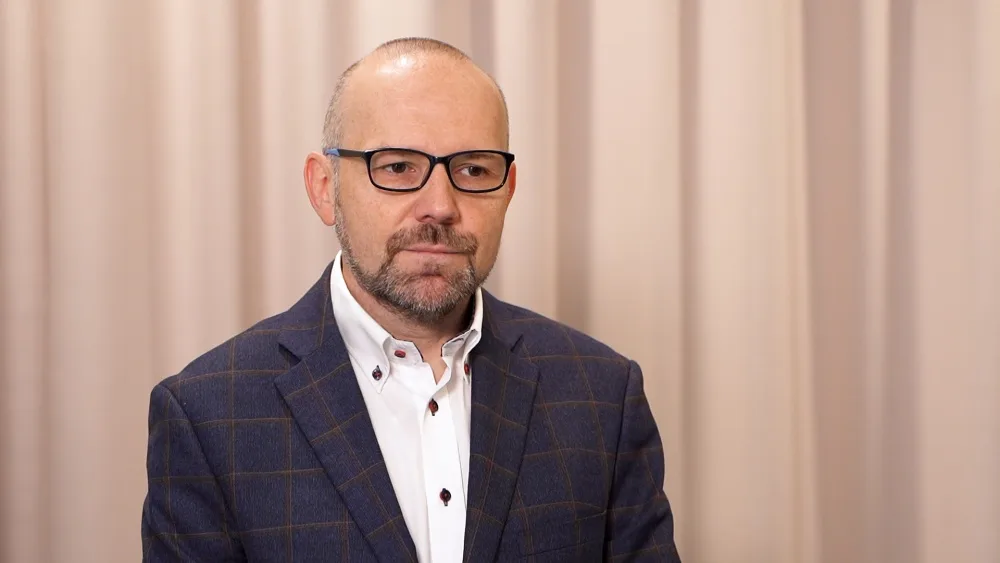
says Daniel Szewieczek, Head of Savings at ING Bank Śląski, in an interview with Newseria Biznes.
More savings, more awareness
The growing sense of security likely comes from the fact that more Poles are saving — and using individual pension products more actively.
Today 47% of people put money aside for retirement. Three years ago it was 34%, and last year 39%.
One in three respondents typically saves between 100 and 500 PLN per month, while 10% save over 1,000 PLN.
“The higher the monthly contribution, the greater the capital accumulated for retirement — and the more freedom you have later,” adds Szewieczek.
Among households earning 7,500–10,000 PLN per month, 50% save regularly, and where income exceeds 10,000 PLN, two in three people do so. Retirement is now the second most common reason for saving (21%), up by 7 percentage points versus last year. The top motivation remains saving for emergencies (“a rainy day”).
What Poles fear most — and what they hope for
The biggest retirement concern is health — cited by 55% of respondents.
Half also fear running out of money, and 24% worry about losing independence and relying on others.
At the same time, optimism is growing:
- 43% expect to have lots of free time,
- 40% hope to finally pursue personal dreams.
“This is why planning the financial aspect of retirement is so important — so you can actually make those dreams real,” says the ING expert.
Still — many have never checked their future pension
More than half of future retirees have never checked what pension they might receive.
Among the youngest group (18–24), as many as 77% have never done so — which is understandable as many are just entering the workforce. But interest rises significantly with age.
“Awareness of your future pension is still low because people don’t always know how to calculate it. Most rely on tools from the Social Insurance Institution (ZUS) or the annual letter it sends. People aged 55+ check most frequently. Among younger people, only 25% try to make any estimate — even though there are many ways to do it today,”
notes Szewieczek.
ING’s online retirement calculator helps estimate how much one can gain by saving through IKE or IKZE — individual retirement accounts that can significantly improve future household budgets. Awareness of these tools is clearly rising.
PPK and IKE gaining strong traction
A few years ago, abbreviations like PPK (Employee Capital Plans) or IKE (Individual Retirement Account) were barely known. Today:
- nearly 60% of Poles know what they are,
- 40% also recognise IKZE and PPE (occupational pension schemes).
“That’s very positive — it shows people are becoming more financially aware and actively interested in their future,” Szewieczek emphasises.
According to the Polish Development Fund, PPK assets reached nearly 41 billion PLN by the end of September 2025 — up 41% year-on-year.
Participation is now 55.3%, with over 4.9 million active accounts.
“PPK is the most popular because it is offered broadly by employers. But among individual clients, IKE is the top choice thanks to its tax advantages — no capital gains tax, and a high contribution limit that makes it meaningful for long-term savings,” he adds.
According to UKNF, there were 964,600 active IKE accounts at the end of 2024, with 22.8 billion PLN in assets, up from 860,000 and 18.2 billion PLN a year earlier. IKZE remains less popular, partly because it launched later — but still counts 593,000 accounts with 12.1 billion PLN (vs. 514,000 and 9.2 billion PLN the year before).



