


More than half of students in Poland—54%—have paid work, while only 2% describe themselves as unemployed, according to an SW Research survey conducted under the Polish Business Roundtable’s Career Programme. The automotive industry is among the sectors welcoming them. Employers say that hiring young people gives companies earlier access to talent and an opportunity to develop it, while students gain their first professional experience in an increasingly difficult labour market.
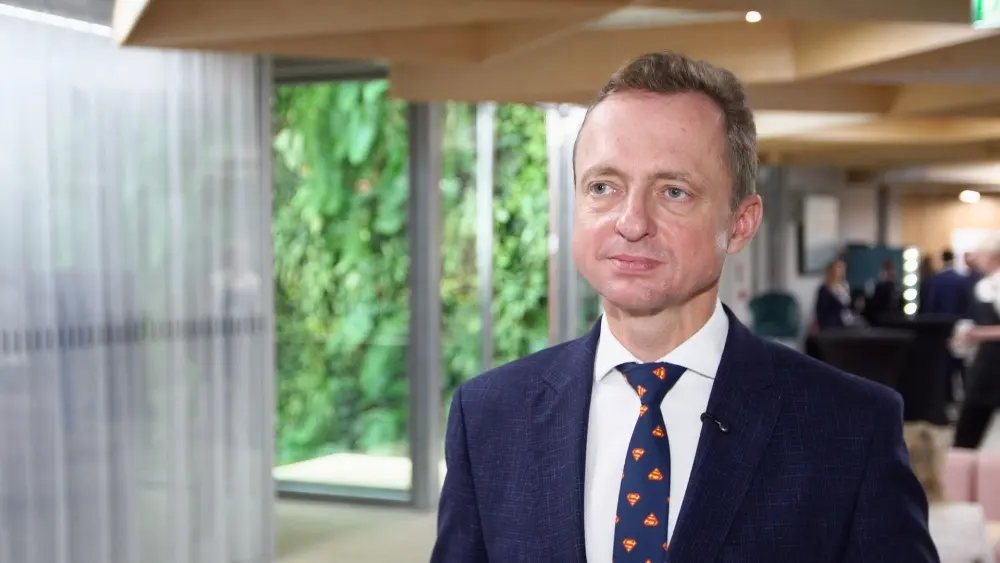
“Students are a very important part of the labour market, not just in automotive but across industry. At our company, 60% of people carrying out assignments are young people under 26 taking their first career steps while studying. That scale shows they are not simply an addition or a way to fill staffing gaps during holidays: they form the foundation of our business,” Jacek Opala, president of Exact x Forestall, told Newseria.
Young people still find it harder to enter employment than older groups. Statistics Poland data show an unemployment rate of 11% among 15–24-year-olds in the second quarter of 2026, compared with 3.2% for adults overall. The average time spent looking for work also increased over the year, from 7.8 to 9.2 months.
“A first job is extremely important. The sooner we can combine the theory learned at university with practice and labour-market expectations, the better. It becomes easier to build our value and shape our future career. I am a good example: I started my first job in quality control as a first-year student. I combined work with study and then moved through successive career stages. Today I lead Exact x Forestall Group. Many of our current managers have followed similar paths,” Opala said.
Flexibility matters, but expectations remain
Almost 30% of students surveyed by SW Research work full-time, while slightly more—31%—work casually or occasionally. Others combine study with reduced hours: 20% work three-quarter time and 16% half-time.
“Students can combine employment with university classes, but on one condition: work must be partly adapted to their timetable, and the academic year has its own cycles. A student’s availability in October is different from during exams or summer holidays. A flexible approach and the ability to adapt availability to that cycle therefore matter,” Opala explained.
“Flexibility does not mean a lack of responsibility, regardless of someone’s availability or how many hours they work in a month. We expect the same as from everyone else: responsibility, timeliness and quality. That is also something young people gain, because their first professional experience teaches responsibility, punctuality and how to function in a real workplace.”
Students’ average earnings now stand at PLN 4,128 net, up 14% from PLN 3,623 a year earlier. The largest group in the SW Research survey, 19%, earned PLN 4,000–5,000 net a month.
“Pay is of course important for young people entering the labour market, but increasingly they ask what they will learn, which skills they will acquire and what they will be able to put on their CV. Development also matters: what the company offers, how it develops people and teaches teamwork, and whether it provides access to technology and tools used later at work,” Opala said.
Scholarships, mentoring and digital recruitment
Exact x Forestall runs a scholarship programme for young people taking their first professional steps. Applications for its fifth edition close on 30 September. This academic year, the company will award several dozen scholarships worth PLN 10,000 gross each.
“We want young people to see us not merely as a place to find their first job, but as a first step in a career. We fund scholarships, but offer more: internships, mentoring, training and contact with business. After five editions, we will have awarded almost 90 scholarships, and the programme’s value is approaching PLN 1 million,” Opala said.
The programme includes internships, mentoring and training in technical skills. Opala also highlighted the xPeople application in the student–company relationship. It enables the remote digital recruitment young people expect, then helps manage availability and skills development. Students can specify their availability and choose working dates around university classes.
“A company that hires young people gains access to potential and talent much earlier. It can compete for the same worker with five years’ experience, but will probably face ten other companies. Bringing someone in at an early stage lets it shape its workforce and build a culture of continuous learning and new skills, which is extremely important in the dynamic environment businesses face today,” he said.
AI and automation change the skills required
Industrial change is increasing the need for continuous upskilling, particularly in automotive. Exact x Forestall’s EuroMotoBarometr 2026 report found that 65% of European automotive companies already automate production processes, while 22% plan to do so. Another 35% are considering expanding production into other sectors.
“AI and automation are changing expectations of young candidates very quickly. A few years ago it was enough to learn how to do your job; now you need to understand the process and know how to use data and tools, including artificial intelligence. AI will not replace managers, but those who do not use it will be replaced by people who can work more efficiently and faster with its help,” Opala said.
The xAcademy programme focuses on specific skills through training primarily related to quality control and industry. This year, 80 candidates applied and 30 participants completed either the full pathway or selected modules.
“Until recently, xAcademy was a quality school where we taught quality tools and lean manufacturing. Today we also teach artificial intelligence and tools that improve the productivity of quality inspectors,” Opala explained.
Source: Newseria.