Kompania Piwowarska has opened an automated high-bay warehouse in Poznań. The PLN 230 million investment increased the brewery’s total storage capacity from around 23,000 to 58,000 pallets and is intended to raise the share of direct deliveries to customers’ warehouses from 50% to 90%. The company says the logistics expansion will help it respond to growing demand for alcohol-free and flavoured beers and the increasing importance of modern retail channels.
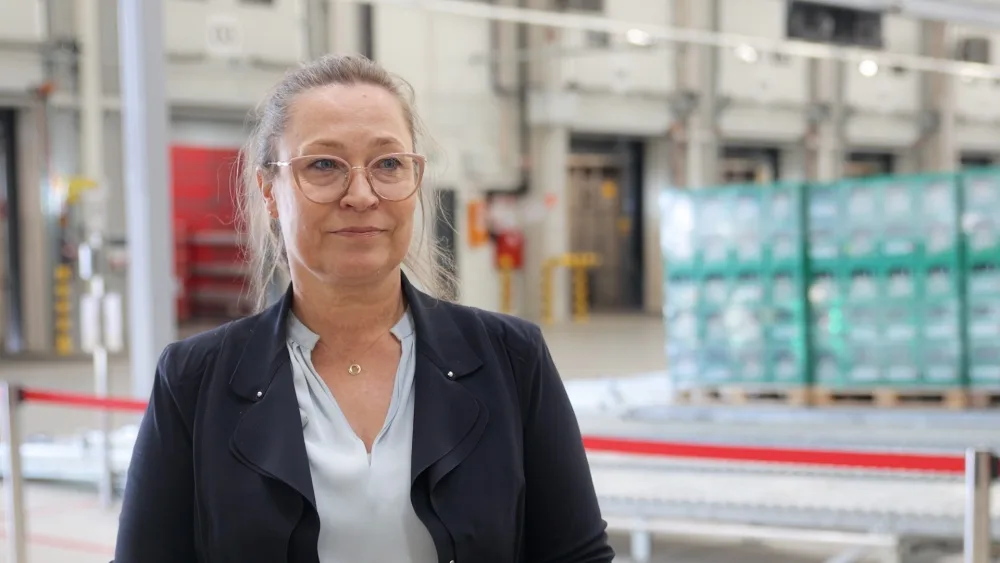
“We are building logistics infrastructure tailored to the brewery’s actual needs. This is our largest and most complex facility, because this is where alcohol-free and flavoured beers are produced,” Dorota Peter, supply chain director at Kompania Piwowarska, told Newseria Biznes. She said adapting capacity and logistics was necessary to manage the whole supply chain effectively.
Changing beer demand requires different logistics
According to the Polish Brewers employers’ association, Poland’s beer market has been shrinking for several years. In 2025, sales fell by 5.5% in volume and 4.1% in value. Alcoholic lagers, the largest part of the market, recorded a 6.8% decline.
At the same time, alcohol-free beer sales increased by around 3%, to approximately 2 million hectolitres. That segment was worth PLN 1.82 billion, or about 8% of the total beer market’s value.
Peter said the modern retail channel is expanding while traditional retail is declining. Changes in consumption, consumer preferences and customers’ operations directly affect how the brewer needs to prepare its deliveries.
One objective is to send more products directly from the Poznań brewery to customers, rather than route them through distribution and buffer warehouses. The target is approximately 90% direct deliveries, compared with around 50% before the investment.
Automation handles pallets from bottling line to dispatch
“The warehouse is a revolutionary change for Kompania Piwowarska because we can store products automatically, without relying on heavy forklift work. The process is fully automated: from collecting the pallet from the bottling line to preparing it for shipment, all the work is done by automated equipment,” said Bartosz Bukowiecki, senior manager for the strategic logistics project.
He said the system improves safety by reducing interaction between people and forklifts.
The new warehouse is 40 metres high and contains more than 41,000 pallet positions. Twelve automated stacker cranes place and retrieve pallets, and the installation comprises around 1,000 interconnected devices. A Monorail system connects it with the brewery’s other infrastructure.
Maximum throughput is 552 pallets per hour, supported by 18 loading docks. Commercial operations began in June 2026, and occupancy reached almost 98% in recent weeks. The warehouse is expected to achieve its full target performance in March 2027.
“The installation has already significantly reduced the time needed to prepare a load. Previously, it took 60–70 minutes. Now the vast majority of loads are prepared in under 40 minutes, and loading by the operator takes between 12 and 17 minutes,” Bukowiecki said.
The company’s largest supply-chain investment
Work on the project began in 2023. At PLN 230 million, it is Kompania Piwowarska’s largest supply-chain investment to date.
Anna Raczkowska, strategic supply planning director, said one strategic objective was to consolidate the distribution network: combine warehouses, reduce their number and increase efficiency and responsiveness.
“The investment allowed us to increase storage capacity from around 23,000 to 58,000 pallets. That is a very large increase, helping us raise the share of direct deliveries to customers,” she said. Faster delivery and a better response to demand are central benefits.
The additional capacity also matters for production. The company says that beer-bottling capacity had sometimes been constrained by available warehouse space.
Customers are also consolidating operations and developing modern warehouses with their own requirements. Raczkowska said loading from docks makes unloading easier for customers and improves their efficiency.
Less intermediate transport could lower emissions
Kompania Piwowarska estimates that reducing movements between the brewery and intermediate warehouses could cut carbon dioxide emissions by more than 2,300 tonnes a year. That is equivalent to around 5% of emissions associated with transporting the company’s products.
The logistics changes are part of its “Better Future 2030” strategy, which includes an objective of making breweries carbon-neutral by the end of the decade.
The warehouse follows earlier investments in production lines for alcohol-free and flavoured beers. Two years ago, the brewer also opened a flavourings warehouse for raw materials used in those categories.
“Today we are completing this stage by securing the route from production to the customer. We are focusing on an efficient supply chain with enough storage capacity and processes that help us manage different product batches and shorten delivery times,” Peter said.
Source: Newseria. English adaptation of the original report.