
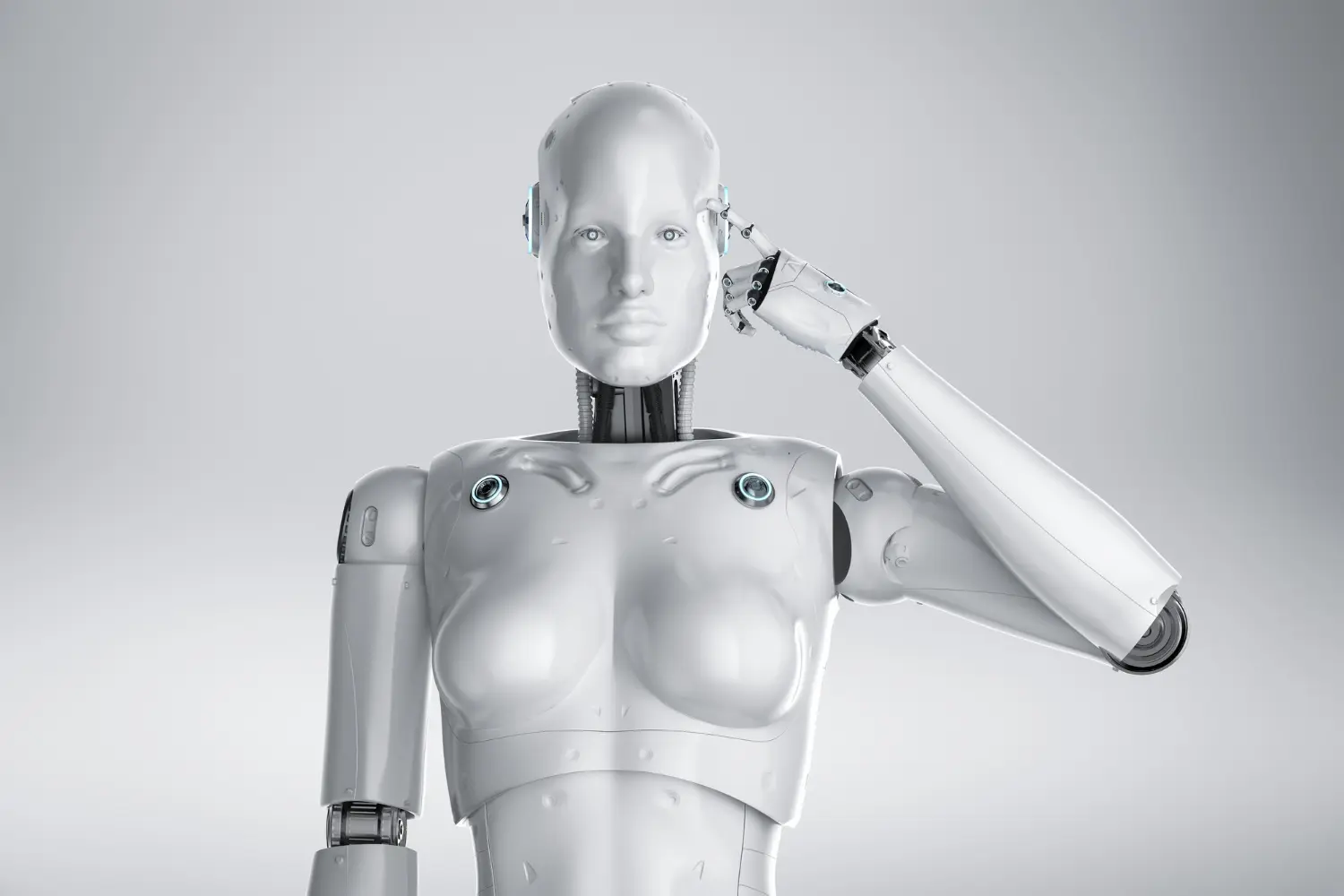


Only 11% of Poles say they would not want humanoid robots to perform any tasks in stores, while 79.6% would accept them in at least one role. The strongest support is for simple informational and support tasks such as checking prices, ingredients and availability, locating products and restocking shelves. Consumers are much more cautious about giving robots responsibility for payments, complaints or independent decisions.
The findings come from the report “What Do Poles Think About Humanoid Robots in Retail?”, prepared by UCE Research and Brave Mind Fighters on the basis of a nationwide public-opinion survey.
A further 9.4% of respondents said they had no opinion. The authors argue that the results show considerable openness to the technology, but caution that curiosity should not be confused with stable long-term acceptance.
“Humanoid robots are not yet present in Polish retail, so consumers know them mainly from social media, films and technology demonstrations. That means the current results should be treated as a social credit of trust rather than proof of established acceptance,” said Arkadiusz Cybulski, co-author of the report from Brave Mind Fighters.
Information roles receive the strongest support
Respondents could select multiple tasks they would allow robots to perform. No individual activity gained support from more than about one third of respondents.
The highest acceptance was for providing information about price, composition and product availability, selected by 32.4%. Almost the same share, 32.3%, would accept robots showing customers where a product is located. Restocking and replenishing shelves was supported by 32.0%.
The authors say these tasks combine two factors: common unmet customer needs and a relatively intuitive understanding of what robots could do.
Piotr Gerke of Brave Mind Fighters pointed to Zebra Technologies’ Global Shopper Study, which found that 69% of European consumers have difficulty finding a store employee when they need assistance, while stock shortages cause 52% of shoppers to leave stores without the products they were seeking.
Consumers prefer a source of information to an adviser
Only 16.8% of respondents would accept a humanoid robot helping them choose a product — around half the level of support for basic product information.
Cybulski argues that shoppers are more comfortable seeing a robot as an information source than as an adviser capable of influencing a purchase decision. He also notes that demand for advice varies strongly by category: customers are more likely to seek assistance when buying electronics or household appliances than when choosing everyday fast-moving goods.
Other relatively well-accepted activities included informing customers about promotions, at 28.0%; bringing a product from a shelf or back room, 26.6%; checking stock in the back room, 26.1%; and monitoring safety and reporting hazards to staff, 25.7%. Basic questions about the store and shopping process were supported by 24.6%.
Safety applications attract interest despite privacy concerns
The 25.7% support for safety monitoring is notable because such tasks can raise concerns about privacy, data collection and potentially facial recognition.
“Given the sensitive nature of these roles, the result can be treated as a good starting point. There is already a group of customers ready to accept robots in more responsible functions, provided the scope of their activity and the way data is processed are transparent,” Gerke said.
The report notes that pilot security applications involving robots are already appearing in the United States and China. Wider deployment will make it possible to test whether declared acceptance translates into real behaviour.
Payments and complaints remain much less trusted
Support drops sharply for tasks involving financial responsibility or judgement. Only 16.8% would accept robots taking payments and finalising purchases, 13.5% would allow them to receive and register returns or complaints, and just 9.1% would accept a robot independently deciding a complaint.
One reason is that payments are already largely automated through self-checkout. The report cites market research indicating that 85% of Poles have used self-service checkouts, with 70% of those users doing so at least once a week. A robot collecting payment therefore offers less obvious additional value than a machine that can find a product or provide information.
First deployments may happen away from customers
The authors expect informational, patrol and safety uses to mature before more advanced physical tasks. Placing individual products on shelves remains technically challenging because objects differ in shape, weight, stiffness and the way they need to be gripped.
Cybulski believes the first real humanoid deployments in Polish retail could appear within roughly a year, although they may not initially be highly visible to customers. Retailers are likely to focus on areas where automation produces a clear economic benefit.
The competitive advantage may therefore go not to chains that buy the most robots first, but to those that learn fastest where the technology is genuinely useful.
About the survey
UCE Research conducted the study with substantive support from Brave Mind Fighters using CAWI online interviews. The nationwide sample included 1,011 adult Poles aged 18–80, selected using age, gender and regional quotas. Participation was anonymous.
Source: ManagerPlus; UCE Research and Brave Mind Fighters, “What Do Poles Think About Humanoid Robots in Retail?”.



