
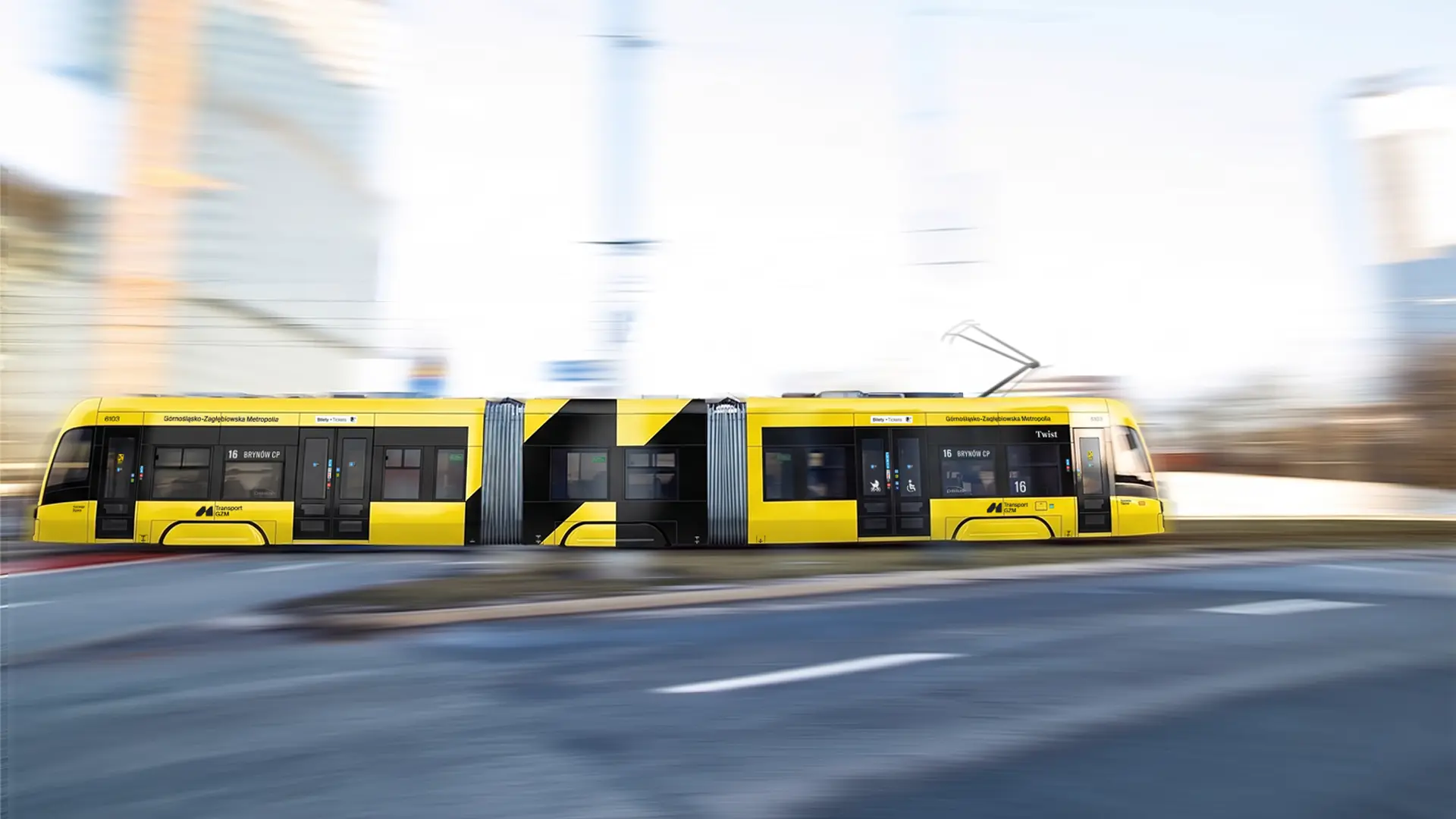


The Upper Silesian-Zagłębie Metropolis (GZM) has secured PLN 321.46 million in European Union funding to purchase 16 electric multiple units. It will be the first rail fleet owned directly by GZM and is intended to become one of the main building blocks of Metrokolej, a higher-frequency metropolitan rail system planned for the Silesian urban area.
The project, titled ‘Zero-emission railway rolling stock for the Upper Silesian-Zagłębie Metropolis’, has a total value of PLN 806.9 million. EU support comes from the European Funds for Infrastructure, Climate and Environment 2021–2027 programme.
For GZM, the investment marks a shift from financing and integrating rail services to owning rolling stock itself. The metropolis already coordinates bus, tram and trolleybus transport, supports regional rail links and operates an integrated fare system across several modes.
First GZM-owned trains
The 16 electric trains will be capable of speeds of up to 160 km/h. Each unit is expected to carry at least 380 passengers, including a minimum of 185 seated. Planned equipment includes air conditioning, power sockets, bicycle space, a family area, two toilets, an automated external defibrillator and accessibility features for passengers with disabilities.
The trains will also be integrated with the existing Transport GZM system. They are expected to include GZM ticket validators and passenger-counting equipment, helping rail operate as part of the same transport ecosystem as buses, trams and trolleybuses.
GZM is carrying out the rolling-stock programme alongside the Silesian regional government. Both institutions plan to purchase 16 trains each, giving a combined initial order of 32 units. The procurement also includes an option for another 20 trains, potentially lifting the total fleet covered by the scheme to 52.
Metrokolej depends on infrastructure upgrades
Buying the trains does not by itself make it possible to launch high-frequency metropolitan services. A key constraint remains rail capacity in the Katowice area, including the need for additional tracks on the Będzin–Katowice Piotrowice corridor as part of the broader reconstruction of the Katowice railway junction.
The first new GZM trains are expected to enter service in the second quarter of 2029. Regular Metrokolej operations are currently planned to begin in December 2029.
The project is part of a wider effort to make travel across the Upper Silesian metropolitan area less dependent on municipal boundaries. GZM has already integrated fare systems, expanded metropolitan bus routes and connected public transport with Metrorower, Poland’s largest municipal bicycle-sharing system.
The long-term goal is a network in which rail becomes another fully integrated metropolitan mode rather than a separate layer of transport. If infrastructure works and rolling-stock deliveries remain on schedule, 2029 could become a decisive year for that transition.



