

A government bill that would exempt sports fields and other recreational facilities from national noise limits is nearing the final stage of parliamentary approval. However, the Polish Ombudsman (Rzecznik Praw Obywatelskich) has expressed serious concerns about the bill’s constitutionality and its compliance with citizens’ right to health protection. The Ombudsman’s office has also reported a growing number of complaints from residents about excessive noise from sports facilities. Experts warn that such noise can have serious health consequences.
Noise Pollution as a Public Health Threat
According to Poland’s Central Statistical Office (GUS) report “Exposure of Urban Populations to Noise in Cities over 100,000 Inhabitants” (2024), noise pollution is among the main environmental factors affecting the health and well-being of millions of Europeans. Data from the European Environment Agency show that at least 20% of Europe’s population is exposed to long-term noise levels harmful to health. In Poland, in 2021, over 282,000 people living in large cities were exposed to noise exceeding legal limits — mainly road, rail, and industrial noise. Recently, noise from sports fields has drawn particular attention due to a proposal by the Ministry of Sport to exclude such sources from regulatory limits.
“Sports fields and other recreational areas should not be exempted from noise standards, as they often generate very high levels of noise,” says Dorota Malanowska, an attorney specializing in environmental noise complaints, speaking to the Newseria agency. “The noise comes from shouting, screaming, ball impacts, and collisions with metal structures. Expert acoustic analyses show that average noise levels often reach 68 decibels, well above the permissible standard, and impulse peaks can reach 110 decibels.”
Impulse noise — sudden and sharp sounds — triggers intense physiological reactions in the cardiovascular, nervous, and hormonal systems.
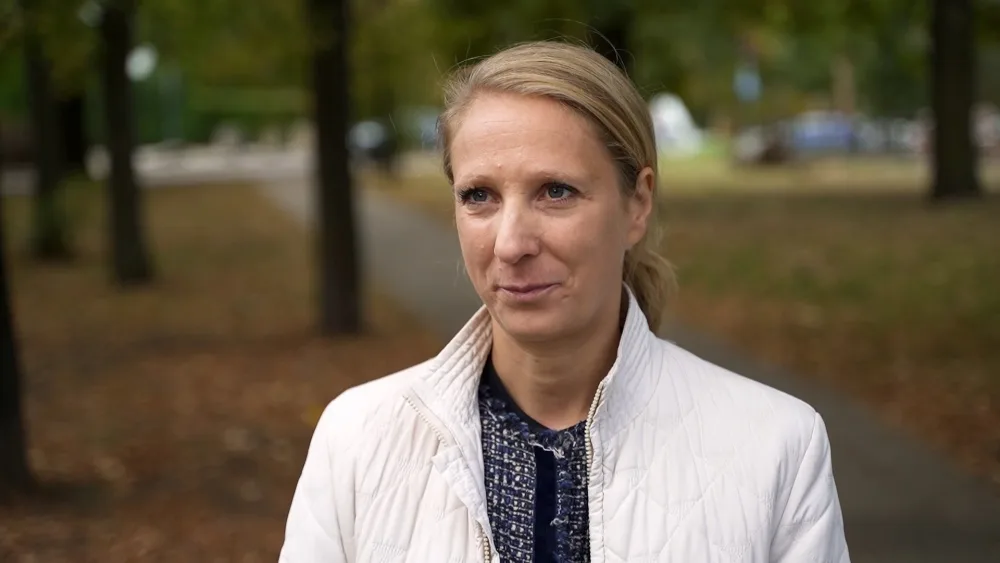
“It causes a rush of adrenaline, muscle tension — and this can happen a thousand times a day, day and night,” explains Agnieszka Kantaruk, who leads the educational initiative ‘Getting Louder’. “Residents living next to such facilities experience a clear deterioration in well-being once noise exposure exceeds reasonable levels. There’s a big difference between children occasionally playing ball and shouting — as has always been normal in neighborhoods — and the industrial-scale noise that occurs when a field operates seven days a week, day and night, without any real quiet periods for recovery and rest.”
The Legislative Proposal
The proposed amendment to the Sports Act would exclude noise generated during sports training, school sports activities, and recreational exercise from national noise limits. The initiative came from the Ministry of Sport and Tourism after a court restricted the use of a sports field at Primary School No. 4 in Puławy, following residents’ noise complaints. The Ministry justified the change by citing an increasing number of cases in which local authorities temporarily or permanently closed sports facilities, particularly community “Orlik” fields.
The bill was passed by the Sejm (lower house of parliament) in mid-September. On September 24, the Senate introduced amendments and sent the bill back to the Parliamentary Committee on Physical Culture, Sport and Tourism for further review.
“The government’s proposal raises serious legal concerns — including procedural ones,” says Malanowska. “It violates the principles of a democratic state governed by the rule of law, as no public consultations were held. Public consultations are a fundamental democratic mechanism that allows citizens to express opinions and influence legislation.”
Ombudsman’s Objections
The Ombudsman formally opposed the proposal, stressing that “promoting physical activity cannot come at the expense of citizens’ right to protection from noise.”
The opinion stated that the draft law undermines property rights, privacy, and the constitutional right to health and to live in an unpolluted environment.
“Another problem is the violation of Article 32 of the Constitution, which guarantees equal treatment of citizens by the state,” Malanowska explains. “People suffering from noise generated by sports facilities would lose their right to environmental protection under existing law, while those affected by road or industrial noise would retain such protection. The bill also breaches the constitutional duty of the state to safeguard public health. Moreover, it lacks clear definitions of key terms, which will inevitably lead to legal chaos.”
Legal and Practical Implications
Currently, citizens affected by noise can pursue two parallel legal avenues:
- Administrative protection, where public authorities are obligated to act ex officio; and
- Judicial protection, where courts rely on objective noise standards set out in ministerial regulations.
“If the new law takes effect, people exposed to sports-related noise will be left with only civil law remedies — mainly Article 144 of the Civil Code,” Malanowska warns. “They will no longer be able to seek protection under the Environmental Protection Act or request intervention from environmental authorities, which are currently required to act on their behalf.”
A Decade-Old Problem
Experts note that noise from sports fields has been a recurring issue since 2012, when the government launched the “Orlik” program to build new community sports complexes. Over 2,600 Orlik fields have been built since, and including school, neighborhood, and private facilities, Poland now has an estimated 10,000 sports fields.
“The interests of field users and nearby residents can be reconciled — ideally at the investment-planning stage, when it’s easiest to foresee all potential impacts,” says Janusz Cymer, court mediator at the Kurier Law Office. “Even for existing fields, there are ways to meet both sides’ expectations — for instance, limiting operating hours or using sound-insulating materials and barriers.”
Most resident complaints arise from 24/7 operation, the use of noisy infrastructure elements, the lack of acoustic insulation, and insufficient supervision or law enforcement at the facilities.
“The noise problem can be solved, but it requires a willingness to talk on both sides,” says Agnieszka Kantaruk. “Too often, residents report problems to local authorities and are ignored, which only increases frustration and pushes them toward court action — something that could easily be avoided.”
Possible Solutions
Experts suggest creating and implementing a sports-field audit procedure whenever such conflicts arise. An auditor could assess the situation and recommend corrective measures — for instance, sound barriers, limited hours, or new surface materials.
Municipal environmental advisors, already employed in many local governments, could take on this role if properly trained in noise pollution issues.
For new developments, experts propose introducing regulations defining a minimum distance between sports fields and residential buildings before construction permits are issued.
In summary, while the government aims to support sports and recreation, legal experts, residents, and the Ombudsman warn that excluding sports facilities from noise standards may create a dangerous legal and public-health precedent — one that prioritizes athletic activity over citizens’ fundamental right to a healthy and peaceful environment.