

As expected, the U.S. Federal Reserve left interest rates unchanged, maintaining the target range for the federal funds rate at 4.25%–4.50%. This marks the fifth consecutive decision to hold rates steady, with the last rate cut occurring back in December 2024. While most Federal Open Market Committee (FOMC) members supported the pause, two governors—Christopher Waller and Michelle Bowman—dissented, favoring a 25 basis point rate cut at the July meeting. As a result, the probability of a rate cut in September, as priced by Fed Funds Futures, dropped below 50%. The U.S. dollar strengthened, and Treasury yields rose in response.
A Historic Split Among Governors
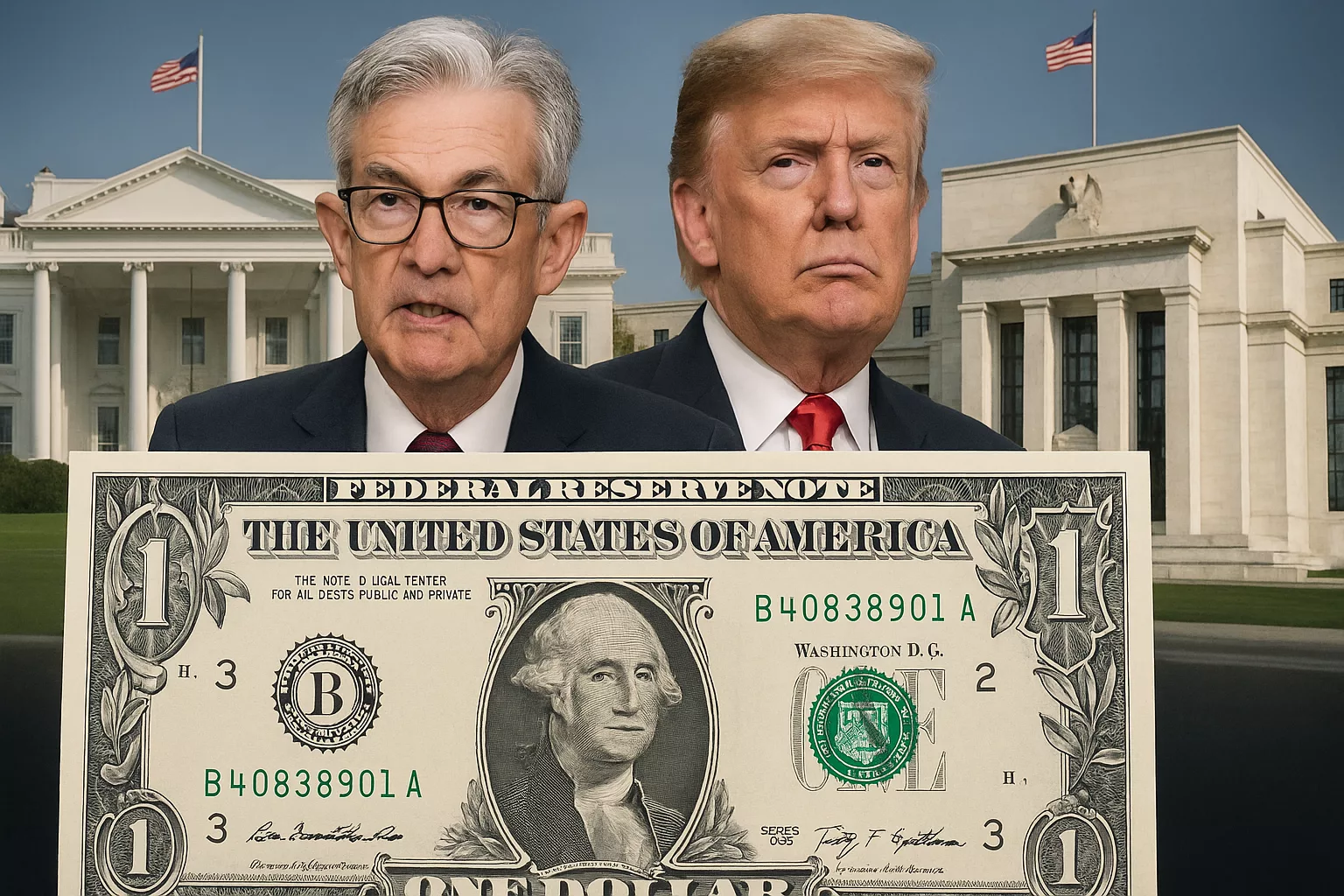
Internal debates at the Fed are intensifying. Dissent from members of the Fed’s Board of Governors is rare. During the entire terms of former chairs Ben Bernanke and Janet Yellen, no governor issued a dissent. The last time two governors opposed the majority decision was in late 1993 under Alan Greenspan. Bowman and Waller argue that the inflationary risk from recent tariffs is limited and that more attention should be paid to potential economic slowdown. Notably, Waller is frequently mentioned as a potential successor to current Fed Chair Jerome Powell. Adding to the context is ongoing political pressure from President Donald Trump, who has for months called for aggressive rate cuts and criticized Powell’s policy stance.
Powell Holds Firm—No Guidance on September Cut
At the press conference following the FOMC meeting, Chair Jerome Powell gave no hints that a rate cut would occur in September. He stuck to the Fed’s cautious approach, stressing that the full economic impact of recent government policies, particularly new trade tariffs, remains uncertain. Powell emphasized that the Fed is in a comfortable position to wait for more data before making any decisions.
Powell repeatedly referenced the labor market, highlighting the low unemployment rate as a key indicator. While job growth has slowed, Powell attributed this partly to reduced immigration, which could limit job creation without signaling a real downturn. He stated that current monetary policy remains moderately restrictive but does not overly burden the economy.
With no clear signal from Powell and a consistent message from most FOMC members, the odds of a rate cut in September have significantly declined. This stands in contrast to 2024, when the Fed began preparing markets for a September rate cut as early as July. Although that situation marked the start of a rate-cutting cycle and the current context concerns the potential resumption of such a cycle, the difference in communication is striking.
Jackson Hole: The Next Policy Signal?
The Fed will have another chance to signal its intentions at the Jackson Hole Symposium, hosted by the Kansas City Fed from August 21 to 23. Powell traditionally delivers a keynote speech at the event, which has often been used to prepare markets for changes in monetary policy.
All Eyes on Upcoming Data
For a September rate cut to materialize, upcoming economic data must clearly point to a slowdown. Before the next FOMC meeting, two labor market reports and two inflation readings will be released. The most critical indicators will be the unemployment rate and inflation gauges such as CPI and PCE. A scenario in which unemployment rises and inflation remains moderate could tip the balance in favor of a rate cut after the summer.
Author: Łukasz Zembik, OANDA TMS Brokers
Source: CEO.com.pl