European Commission President Ursula von der Leyen has proposed a European Security Council and a crisis consultation mechanism inspired by NATO’s Article 4. The initiative is intended to help EU member states respond to growing hybrid threats, including those attributed to Russia. Security experts say any new structure would need close coordination with NATO.
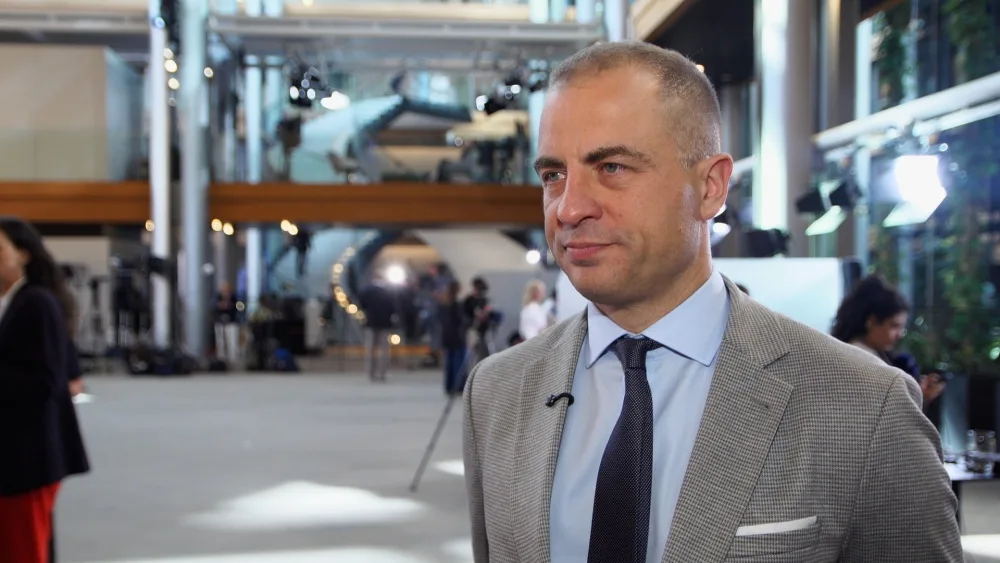
Former Polish ambassador to NATO Tomasz Szatkowski told Newseria that a European Security Council need not be harmful if it strengthens cooperation without undermining the Atlantic alliance. However, he expressed concerns about calls for greater European control of defence decision-making.
A European consultation mechanism
The proposal was presented in von der Leyen’s State of the Union address on 16 September 2026. She argued that Europe needs its own rules for responding to hybrid threats. Under the envisaged security protocol, a member state facing a serious incident could initiate consultations bringing together representatives of other EU countries.
The concept is compared with Article 4 of the North Atlantic Treaty, under which allies consult when they believe their territorial integrity, political independence or security is threatened. A similar European mechanism would create an additional framework for political discussions, although its powers and relationship with existing structures would need to be defined.
Debate over European defence autonomy
Szatkowski cited subsequent remarks by Manfred Weber, leader of the largest political group in the European Parliament, about expanding European security structures. In his view, proposals for a European command system or reduced national control of armed forces risk weakening both democratic oversight at national level and NATO’s central role. These are his assessments rather than established consequences of the proposal.
EU Commissioner for Defence and Space Andrius Kubilius has also argued that Europe’s security institutions need to adapt to a changing geopolitical environment and what he has called “NATO 3.0”. He has discussed an E5+ type European Security Council to help leaders take decisions more effectively.
One possibility envisaged by Kubilius is a council serving as a leadership body for a European Defence Union, alongside a broader assembly of participating countries. He suggested that a forthcoming European Security Strategy, expected around the end of October, could clarify the direction of the proposals.
Complementing rather than duplicating NATO
Szatkowski argues that the EU can expand its role in non-military security, provided its mechanisms are coordinated with the alliance. He cautions against creating parallel obligations that could indirectly involve NATO members in operations not agreed within the alliance.
In a major war or crisis, he believes even some non-military objectives should be aligned with NATO’s military command in Mons, Belgium. Supporters of a stronger European defence role, meanwhile, argue that better EU coordination could improve resilience and the continent’s ability to act collectively.
The debate therefore concerns not only institutional design but also the division of responsibilities between EU institutions, national governments and NATO. The precise form of any European Security Council remains a matter of policy discussion.
Source: Newseria; comments from Tomasz Szatkowski and statements attributed to EU officials.