
The European Commission is preparing new climate resilience and water initiatives following severe heatwaves, droughts and wildfires. The Newseria report cites nearly 680,000 hectares burned in the EU and more than 35,000 additional deaths during heatwaves in 2026. In her State of the Union address, Commission President Ursula von der Leyen announced measures to help Europe adapt to climate change, while Polish MEPs called for better prevention, local input and support for affected communities.
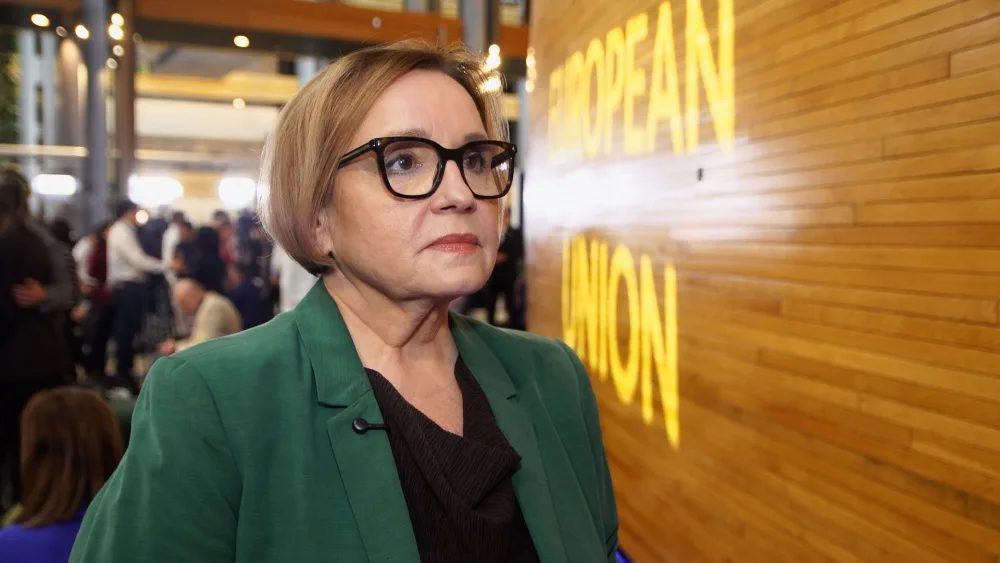
“Member states should first and foremost help their citizens,” Anna Zalewska, a Law and Justice MEP in the European Conservatives and Reformists group, told Newseria. She emphasised human management of forests and argued that prevention must address human causes of fires, including arson and litter left in woodland.
Wildfires strengthen calls for monitoring and prevention
According to European Forest Fire Information System figures cited in the report, almost 679,000 hectares burned in the EU between January and 23 September 2026. More than 2,100 fires covering approximately 30 hectares or more were detected.
Major fires affected countries including France, Spain, Greece, Croatia and Ireland, while the Hautes Fagnes peatland in Belgium was also devastated. Poland’s Ministry of Climate and Environment reported that Polish forests burned more frequently than a year earlier.
Andrzej Buła, a Civic Coalition MEP in the European People’s Party, said modern technology could help identify places where fires recur and monitor emerging threats.
“Whether it is southern France, southern Spain, Italy or Greece, there is a recurring pattern. We need to equip people with modern technologies, including drones with infrared sensors, so they can monitor what is happening and why a fire starts,” he said.
Commission prepares a climate resilience framework
Von der Leyen announced that the Commission would propose a new climate resilience framework in October. It would identify 100 European territories most vulnerable to the consequences of climate change, assess the risks and determine the level at which they should be managed.
She also highlighted adaptation technologies as a rapidly growing market.
Zalewska remained sceptical of the wider policy agenda. She argued that climate measures could bring additional taxes and further pressure to decarbonise, while overlooking Europe’s dependence on China for critical raw materials and rare earths.
She said she wanted that dependence to feature prominently in the climate debate. COP31 is scheduled for 9–20 November 2026 in Antalya, Türkiye, according to the source report.
Affected communities need compensation and restoration plans
Zalewska said immediate priorities should include funding compensation for people whose land and property have been damaged, alongside long-term plans to restore the natural environment.
She also called for properly funded monitoring and rapid-response systems and public education, including clear emergency contact information and rules on access to forests.
The Commission president highlighted Europe’s insurance protection gap. Private insurance currently covers only around 25% of losses caused by disasters in Europe, according to the figures cited in her address.
Water management requires cross-border cooperation
The Commission is also preparing a European water initiative intended to improve risk management for a resource essential to agriculture and industry.
Von der Leyen said almost one litre is lost for every four litres moving through European water networks, most often because of leaks.
Zalewska called for a comprehensive water strategy using infrastructure and other tools to retain water while supporting communities exposed to flooding.
“We must think of water together as a strategic resource, because at some point we may run short of it,” Buła said.
He argued that regions need tailored programmes within a comprehensive European approach. Cross-border cooperation is particularly important for shared catchments, including those along Poland’s border with Czechia in the Opole and Lower Silesia regions, and the River Oder shared with Germany.
“This must go beyond political divisions,” he said.
Firefighters and rescuers should help shape the European response
Von der Leyen also announced a European firefighting fleet, to be developed using proposals from experienced firefighters and rescuers. Work would examine preparedness, prevention, civil–military cooperation and the need for new capabilities.
Buła said people on the front line of disasters should be asked what they lack and how they want support organised. He called for input from responders in countries such as Greece, Italy and Poland.
“If we write a list of needs from the people who experience this every day and think about prevention, it will be easier to gain acceptance, and a European plan will not carry political colours,” he said.
He favoured a process built from the ground up through broad consultation, with countries contributing equipment and capabilities. In his view, disaster preparedness should be an ongoing strategy, improving from year to year, rather than a one-off initiative.
Source: Newseria. English adaptation of the original report.