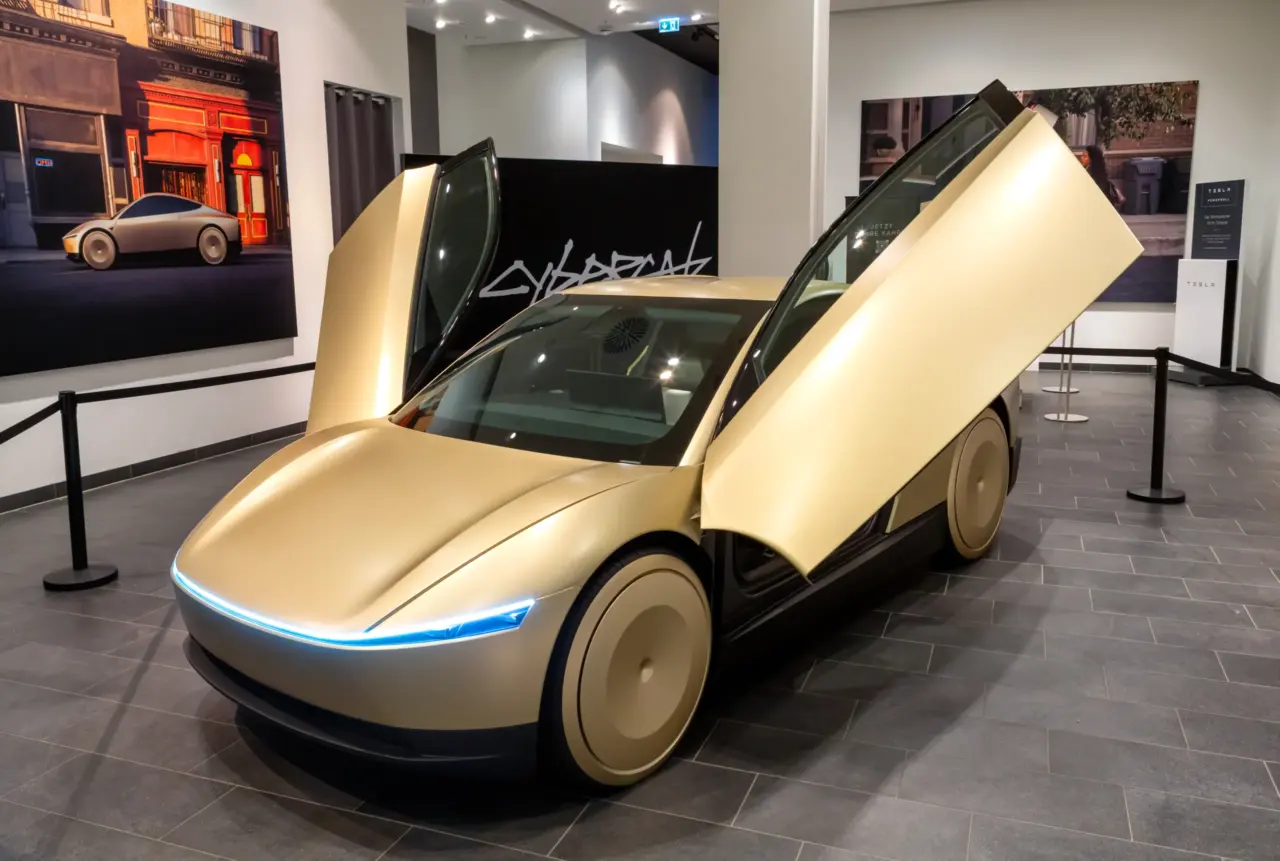



On March 5, the European Commission will present an action plan for the automotive industry aimed at supporting a sector under significant pressure. Discussions within the EU include the possibility of revising the ban on the sale of combustion engine cars from 2035, as requested by Members of the European Parliament from the European People’s Party, who argue that this goal appears difficult to achieve. However, Marcin Korolec, President of the Board of the Foundation for the Promotion of Electric Vehicles, believes that such a decision would be detrimental to the future of the automotive industry.
On January 30, the European Commission initiated strategic discussions on the future of the automotive industry. This meeting included 22 key players from the automotive sector, including companies such as Renault, Volvo, and Volkswagen. The action plan based on these discussions aims to set a course that will ensure the development of the automotive industry in Europe and enable it to compete effectively on the international stage. In Europe, this industry directly and indirectly employs 13 million people and generates over 1 trillion euros in annual turnover (7% of the EU’s GDP).
“We are in the middle of a strategic dialogue on the automotive industry taking place in Brussels, and on March 5, we will know its results. On one side, we have the European Commission, and on the other, European car manufacturers. Representatives of non-governmental organizations, such as Transport & Environment, are also involved in the dialogue. I believe that investment certainty is crucial. We hear statements from the heads of automotive corporations, such as Renault, saying: ‘Do not touch the ban, we are planning our investments based on it today; stop interfering with our plans.’ So, I think that investment certainty is essential for manufacturers, and changing plans from one day to the next is, for many reasons, bad, unnecessary, and disruptive,” said Marcin Korolec, President of the Board of the Foundation for the Promotion of Electric Vehicles and the Green Economy Institute, in an interview with Newseria.
He believes that the coming decade will require actions and investments to prepare the sector for new regulations.
“Talking today about revising targets related to the electrification of transport in Europe, and, for example, revising the ban on the sale of combustion engine cars in 2035, structurally makes no sense. Future competitiveness lies in new technologies, and delaying the modernization of the European industry will lead nowhere—it goes against European jobs and European competitiveness,” emphasized Marcin Korolec.
According to him, this issue is also crucial for energy and resource security. Dependence on liquid fuels (gasoline, diesel, LPG) is a fundamental problem for the entire EU. In 2022, 97.7% of the oil and petroleum products consumed were imported. The situation is similar in Poland, where, according to the think tank Forum Energii, about one-third of diesel demand and over 80% of LPG demand is met through imports.
“If we consider the priorities of the Polish presidency, which include energy security and Europe’s energy self-sufficiency, there is no better path than the electrification of transport. All the oil we consume in Europe is imported from abroad, mainly from countries with questionable democratic reputations. Today, this is not only about jobs and building the future competitiveness of European industry but also about independence and energy security,” explains the FPPE expert. “Traditional fossil fuel-based technologies are unhealthy for all of us, and if we want to build the foundations of future competitiveness, the only way is to invest in new technologies.”
On the other hand, the European sector is losing competitiveness against rivals from China and the USA. Rho Motion, a research firm specializing in electric vehicles, reports that in 2024, global sales of electric cars reached 17.1 million units. While the European market shrank by 3%, the Chinese market grew by 40%. In the first half of 2024, Chinese brands accounted for 10% of new electric vehicle sales in the EU, compared to nearly zero in 2019. The trade war announced by the USA will make Europe the natural market for Chinese electric vehicles. According to data from the China Association of Automobile Manufacturers (CAAM), vehicle exports from China are expected to grow by 5.8% this year, reaching 6.2 million units.
“We must consider assertive trade policy, meaning structuring our relationships with key competitors or economic partners in a way that allows us to say: ‘If you want to sell here, manufacture here, create jobs, invest in new technologies.’ This is how America treats China, which is why the Chinese exports initially destined for the USA are being blocked by tariffs and are flooding into Europe, which seems to be helpless in the face of this,” says Marcin Korolec.
The European Court of Auditors points out that reducing or eliminating emissions from passenger cars is an essential part of the EU’s climate policy. It is necessary not only to reduce carbon dioxide emissions from combustion engine vehicles but also to explore the potential of alternative fuels and to promote battery electric vehicles on a large scale.
“EU countries are struggling to accelerate the transition to electric cars, and the road to achieving this goal is proving bumpy. In its audit report published in June 2023, the Court delivered a clear verdict—the EU battery sector lags behind in the global race. As a result, to achieve the goal of making the vehicle fleet emission-free by 2035, the EU may have to rely heavily on batteries and electric vehicles from outside the EU, which would harm the European automotive industry and the workers employed in this sector,” the Court assessed.