
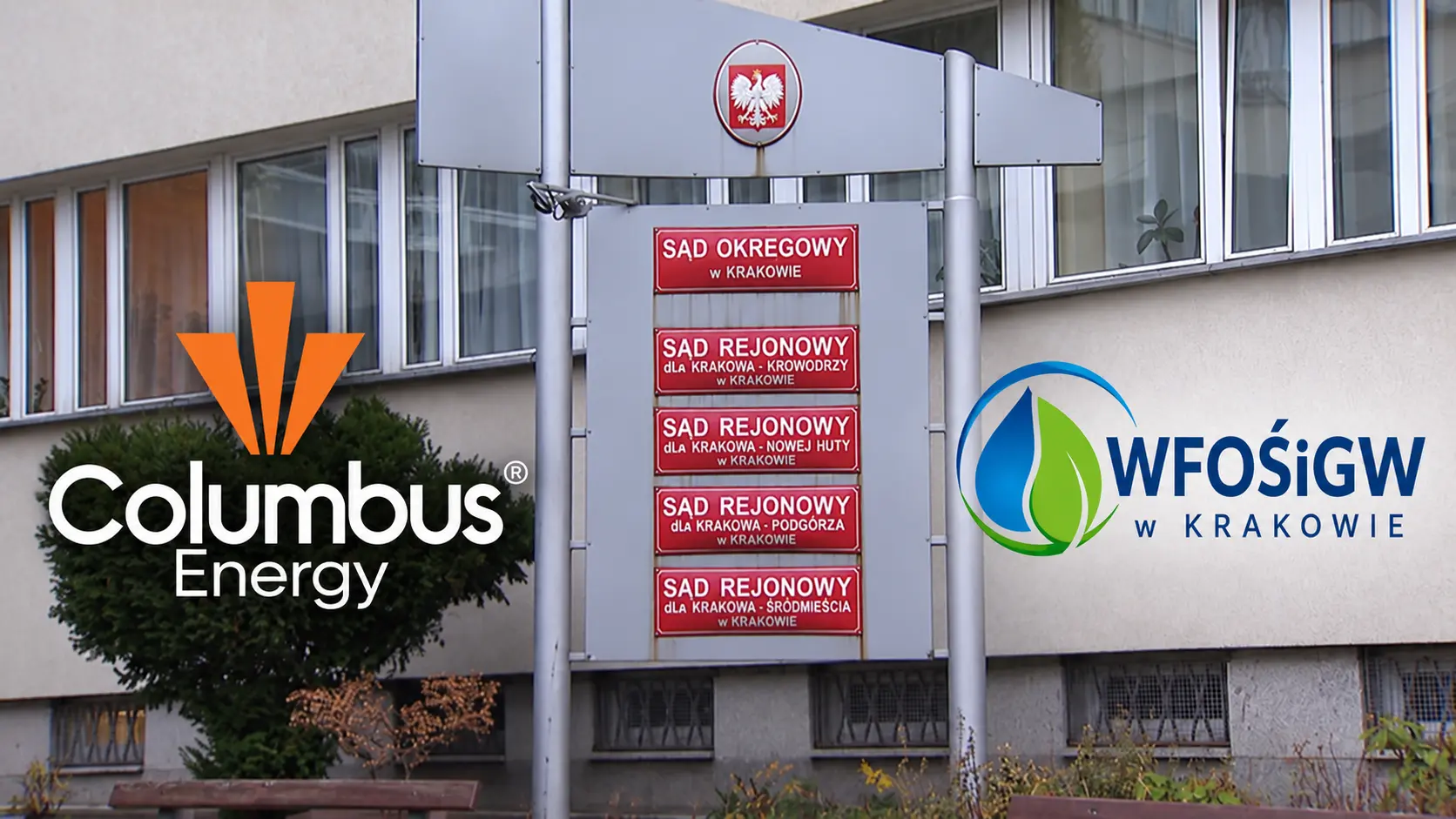


Columbus Energy has sued the Regional Fund for Environmental Protection and Water Management in Kraków for more than PLN 3 million. The company is seeking payment for completed investments, costs it says it incurred after projects had been approved, and remuneration allegedly reduced through price limits applied after contracts were signed. The lawsuit opens a new legal front in the increasingly complex dispute over Poland’s Clean Air programme.
The claim was filed on 4 September 2026 with the Regional Court in Kraków. Columbus disclosed the action on Monday, 7 September, in a current ESPI report.
The company states that the value of the dispute is PLN 3,016,563.31 plus statutory interest for late payment. The largest component, PLN 2,737,621, concerns 64 programme beneficiaries where Columbus says all work was completed and formal requirements were met but funds were not paid.
A further PLN 248,000 relates to costs incurred on 207 contracts. Columbus says that in those cases the fund initially approved financing and later stopped processing the investments. Another PLN 30,542.31 concerns price caps that the company says were applied after agreements with beneficiaries had already been concluded.
There is a small arithmetic discrepancy in the company’s report. The three listed amounts add up to PLN 3,016,163.31, which is PLN 400 less than the total value of the claim stated in the same announcement.
The dispute grew out of changes to the Clean Air programme
The Clean Air programme has faced years of controversy over inflated costs, unreliable contractors and the use of public subsidies. In November 2024, the National Fund for Environmental Protection and Water Management temporarily stopped accepting new applications while the programme was being reformed.
The programme reopened on 31 March 2025 under stricter rules. Mandatory energy audits, limits on eligible costs and a system of operators were introduced. Pre-financing was capped at 35% of costs and linked to participation by an operator — a municipality or regional environmental fund.
The changes were intended to protect consumers, particularly older and energy-poor households, from abusive sales and contracting practices. But the transition created disputes around older contracts, advances, inspections and new settlement standards.
Columbus has returned PLN 21.3 million in advances
In March 2026, Columbus decided to return pre-financing advances in projects where beneficiaries’ agreements with regional environmental funds had been terminated or cancelled.
The company initially referred to around PLN 10 million. By 7 September, it said it had returned 430 advances worth a total PLN 21.3 million. Columbus says it is not currently aware of further advances that should be returned.
In August, the company also changed the way it finances remaining contracts. It obtained a EUR 13.24 million loan, with around PLN 42 million earmarked for completing investments where clients had previously received advances or for returning those advances. Further projects are to be financed by Columbus from its own resources and later refinanced.
A separate prosecutor’s investigation remains under way
The dispute with the funds is only one part of the broader Clean Air controversy involving Columbus. The Regional Prosecutor’s Office in Łomża is conducting a consolidated investigation into activity connected with the company’s implementation of the programme.
Investigators are examining suspicions including misleading beneficiaries, forged signatures and the use of unreliable or false documents in subsidy applications.
A formal investigation was opened on 26 February 2026. The initial announcement referred to suspected losses of at least PLN 715,900. The scale later increased. According to information from the Łomża prosecutor’s office, by 12 May 2026 a total of 238 cases had been combined, with estimated losses of PLN 12.65 million.
Crucially, prosecutors stated at that time that no substantive decisions had been issued and no charges had been presented or formulated against anyone. The proceeding remains an investigation into the matter rather than a finding of guilt. Columbus has said it is cooperating with investigators.
The company has also pointed out that the original 66 combined cases represented around 0.3% of nearly 22,000 agreements it had handled under the programme.
UOKiK is running a separate proceeding
Poland’s consumer authority, UOKiK, is conducting a separate proceeding. In July it raised allegations concerning, among other things, delays in returning money after consumers withdrew from contracts, information about withdrawal rights, installation deadlines and offered equipment.
The filing of allegations by UOKiK does not itself establish liability.
The government has acknowledged wider problems in the programme
The problems surrounding Clean Air extend beyond one contractor. On 11 August 2026, the government adopted a bill intended to protect beneficiaries who may have been harmed by unreliable contractors.
The draft allows, among other measures, suspension of attempts to recover unsettled advances from people who are subject to criminal proceedings concerning alleged fraud by a contractor. The bill was sent to the Sejm on 13 August and received its first reading on 3 September.
Columbus accuses the fund of blocking settlements
In a statement provided on 7 September, Columbus accused the Kraków regional fund of administrative obstruction, ignoring National Fund guidance and blocking payments for investments that the company says were properly completed.
Columbus also claims it has evidence that representatives of the fund encouraged beneficiaries to terminate contracts with the company under threat of losing financing. These are allegations made by one party to the dispute; their validity will ultimately be assessed by the court.
In its stock-market report, Columbus announced that it plans similar legal action against other regional environmental funds. The company says it still has 442 clients whose investments have been submitted for settlement but for whom final tranches have not yet been received, as well as 724 contracts still being implemented. It aims to complete more than 90% of those projects by the end of November.
The lawsuit therefore broadens the Clean Air controversy. Until now, public attention focused mainly on contractor controls and beneficiary protection. The Columbus case means that the settlement procedures used by public institutions responsible for distributing and accounting for billions of zlotys in subsidies may also become subject to judicial review.
Source: ManagerPlus; Columbus Energy ESPI reports, National Fund for Environmental Protection and Water Management, UOKiK and the Regional Prosecutor’s Office in Łomża.



