
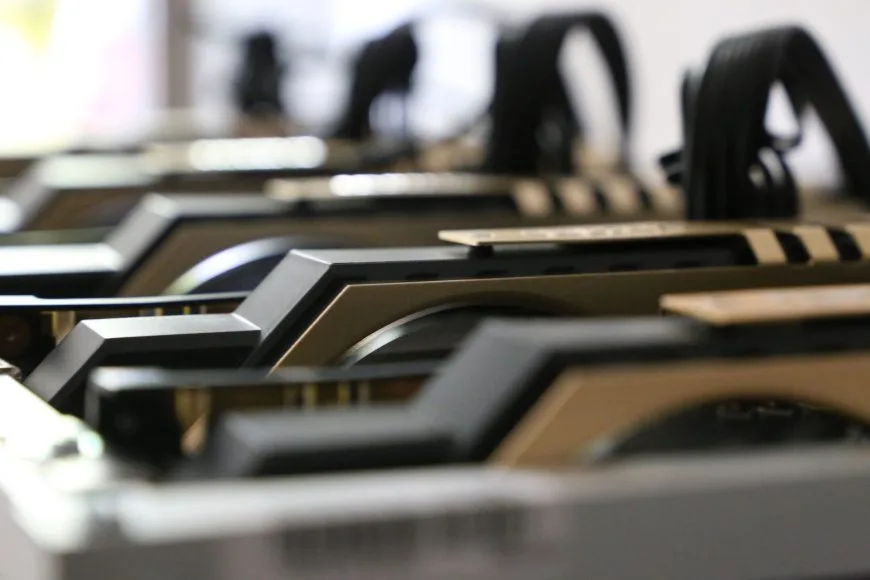


Bitcoin miners are discovering that the infrastructure they built for cryptocurrency may be worth more serving artificial intelligence. Sites with large grid connections, existing power contracts and industrial-scale cooling are increasingly being redeveloped for data centres. CoinShares estimates that AI infrastructure can generate about USD 1.5 million in annual profit per megawatt — roughly three times the level associated with bitcoin mining.
For years, the mining model was straightforward: find cheap electricity, secure a large connection to the grid, build a facility and fill it with specialised machines running around the clock. The AI boom is now creating demand for many of the same locations.
The economics are changing
According to CoinShares, AI-oriented infrastructure can currently generate around USD 1.5 million in annual profit per megawatt, compared with roughly USD 500,000 from bitcoin mining. At the same time, the economics of mining have become more difficult as network competition, hardware costs and electricity expenses increase.
| Business model | Estimated annual profit per MW |
|---|---|
| Bitcoin mining | ~USD 0.5m |
| AI / high-performance computing | ~USD 1.5m |
In the second quarter of 2026, the average cash cost of producing one bitcoin among listed miners was about USD 75,500, while bitcoin traded around USD 58,400 at the end of June. A later recovery in the cryptocurrency price improved margins, but for miners already signing long-term data-centre contracts, the strategic shift is becoming harder to reverse.
Some miners are leaving bitcoin entirely
Several listed miners are already reducing or ending cryptocurrency operations. Keel, formerly Bitfarms, stopped mining bitcoin on 29 June. IREN plans to be largely transitioned toward AI infrastructure by the end of 2026, while CoinShares expects other operators to continue reducing mining capacity over the next several years.
At least 35 EH/s of computing power is expected to disappear from the group of listed miners discussed by CoinShares. That represents roughly 4.7% of a bitcoin network estimated at around 750 EH/s, although some machines may be sold and restarted elsewhere.
The shift becomes especially visible when companies cancel mining hardware purchases while simultaneously signing multi-year data-centre contracts. Once a miner commits its power capacity to an AI customer for 10–15 years, a later rise in the bitcoin price does not automatically make it possible to switch back.
More than USD 100 billion of AI and data-centre contracts
CoinShares estimates that listed bitcoin miners have disclosed more than USD 100 billion in AI and data-centre contracts. More than 4 GW of capacity has been contracted, but only about 550 MW is currently generating revenue. Annual revenue from AI and high-performance computing is already around USD 1.1 billion.
That gap shows how early the transition still is. Many facilities require major rebuilding before they can meet the technical standards expected by AI customers.
The scarce asset is not the mining machine — it is the megawatt
Mining hardware depreciates quickly as newer generations become more efficient. Grid access behaves very differently. The value of a large, already energised connection is rising because new data centres are being planned faster than transmission infrastructure can be expanded.
CoinShares cites a US interconnection queue of roughly 2,600 GW — more than the combined capacity of all operating power plants in the country. In Texas alone, large projects seeking access to the grid total around 410 GW, with data centres accounting for 87% of that demand.
Waiting times have also lengthened. In the PJM region, projects that came online in 2025 had spent more than seven years on average moving from application to operation. Large transformers can take more than 160 weeks to procure.
Converting a mine into a data centre is expensive
Power access gives miners an advantage, but a crypto mine cannot simply be relabelled as an AI data centre. AI workloads require more sophisticated cooling, network connectivity, physical security, redundancy and power-quality systems.
CoinShares estimates that a bitcoin mining site can cost roughly USD 0.7–1 million per megawatt to build, while AI and high-performance computing infrastructure may require USD 8–15 million per megawatt. That means only miners with strong balance sheets, suitable locations and large power connections are likely to capture the full opportunity.
AI demand is pushing electricity consumption higher
The transition is being driven by a much larger structural trend. The International Energy Agency estimates that data centres consumed around 485 TWh of electricity in 2025 and could approach 950 TWh by 2030. Power use in facilities focused primarily on AI is expected to grow even faster.
As a result, the competitive advantage of many miners is shifting away from bitcoin itself. Their most valuable assets may increasingly be the grid connections, land, substations and energy contracts that were originally acquired for cryptocurrency mining.
This article is for information purposes only and does not constitute investment advice.
Sources: CoinShares, International Energy Agency and industry data cited in the original analysis.



